Region
Yên Bái
Home of Văn Yên cinnamon, a geographical indication since 2010
The former northern province behind Văn Yên cinnamon: what national guidance and the research say about its trees, its bark and its seasons — and what they leave out.

Products from this region
Why Yên Bái matters for cinnamon
Vietnam’s Ministry of Agriculture names two areas of Yên Bái — Văn Yên (Van Yen) and Trấn Yên (Tran Yen) — among the country’s cinnamon seed-source areas.1 Its 2022 guidance for growers describes these as areas where cinnamon grows well, with thick bark and a high content and quality of essential oil.1 A 2024 report by Vietnam’s chamber of commerce names Yên Bái among the provinces where the country’s planted cinnamon, “up to 180,000 hectares”, is concentrated.3
Văn Yên cinnamon received a geographical indication in 2010.2 It is the oldest of the three Vietnamese cinnamon indications in our sources; Trà My followed in October 2011 and Trà Bồng on 23 November 2020.4,5
Yên Bái is now part of Lào Cai
On 1 July 2025 Yên Bái was merged into Lào Cai province.6 The geographical indication and most sources still use the name Yên Bái, and so does this page. Văn Yên and Trấn Yên are former districts. The merged province also contains the four Lào Cai seed-source areas named in the same guidance — Bắc Hà, Văn Bàn, Bảo Yên and Bảo Thắng1 — so today’s Lào Cai holds six of the country’s named cinnamon seed-source areas.
Which cinnamon tree grows in Yên Bái?
The answer is less settled than a label suggests. A 2004 field survey of cinnamon in Vietnam suggested that bark from Yên Bái may come from Cinnamomum cassia, while bark from Trà My, in Quảng Nam, comes from C. loureiroi. The two barks looked alike, and the Trà My bark contained much more oil.7 The authors present the Yên Bái attribution as a suggestion, not a finding, and we report it that way.
National guidance does not separate the two: Vietnam’s 2022 grower guidance names the cultivated tree C. cassia,1 while the international trade standard and US regulations assign Saigon cinnamon to C. loureiroi.8,9 What this means for a jar on a shelf is covered in Saigon vs Ceylon cinnamon.
When cinnamon bark is peeled
We found no source that gives separate peeling months for Văn Yên or Trấn Yên. The national guidance sets two seasons for the whole country.
| Source | Jan | Feb | Mar | Apr | May | Jun | Jul | Aug | Sep | Oct | Nov | Dec |
|---|---|---|---|---|---|---|---|---|---|---|---|---|
| Spring peeling season1Mar–Apr | in season | in season | ||||||||||
| Autumn peeling season1Aug–Oct | in season | in season | in season |
The same guidance sets the tree’s timetable: bark from thinnings from year 4–5, selective harvests at years 10–12 and 14–15, and a main harvest of trees over 15 years old. Trees are girdled a week before felling, and bark is peeled in 40–60 cm sections.1 The full sequence is in from tree to bark.
From Yên Bái bark to trade
After peeling, bark is washed, sorted and dried on tarpaulins — never on bare ground — then bundled. National guidance grades it by where it grew on the tree and by thickness: grade A over 5 mm, B 2.5–5 mm, C under 2.5 mm.1
Export statistics are published for Vietnam as a whole, not by province. In 2025 the country exported 120,295 tonnes of cinnamon worth US$300.2 million, as reported by the Vietnam Pepper and Spice Association.10 How much of that came from Yên Bái is not reported in our sources. Species, grades and markets are covered in the Vietnamese cinnamon guide.
Image credits
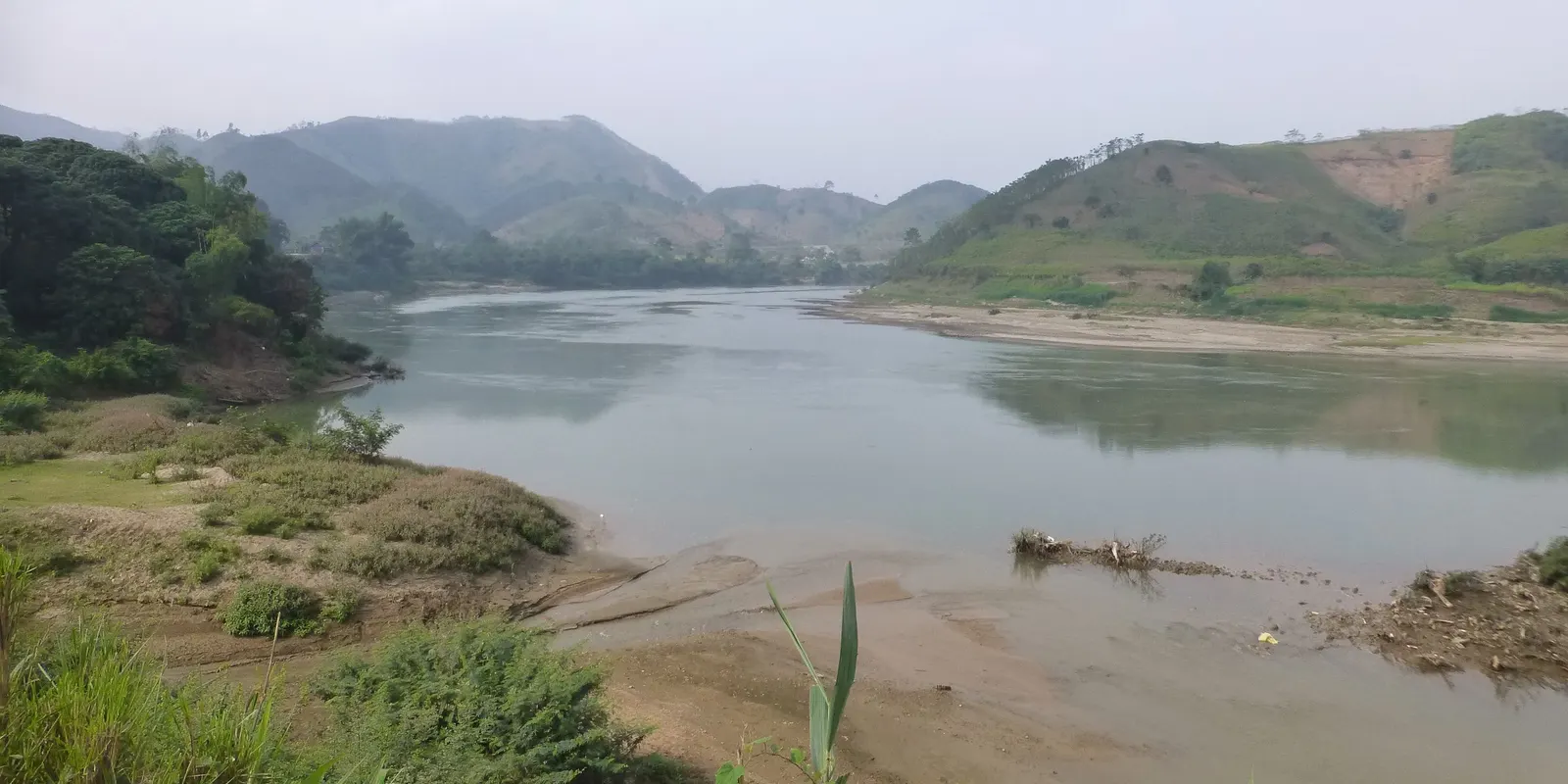
- “Van Yen District - Hwy DT163 - P1380765” by User:Vmenkov, via Wikimedia Commons, licensed CC BY-SA 3.0. Cropped and resized; converted to WebP.
Sources
- 1
Hướng dẫn kỹ thuật trồng, chăm sóc, khai thác cây Quế (kèm Quyết định 14/QĐ-BNN-TCLN)
Technical guidance for growers: seed-source areas (III.1), harvest seasons (VI.2b), harvesting and bark grading (VIII), processing and packing (IX). Names the cultivated tree “Cinamomum cassia BL.” (sic).
- 2
Văn Yên cinnamon geographical indication granted in 2010.
- 3
Indonesia is Vietnam’s largest cinnamon import market
Planted area “up to 180,000 hectares” and the main growing provinces.
- 4
Trà My cinnamon geographical indication granted October 2011.
- 5
Quế Trà Bồng — từ non cao đi khắp năm châu
Trà Bồng cinnamon geographical indication granted 23 November 2020.
- 6
Nghị quyết 202/2025/QH15 về việc sắp xếp đơn vị hành chính cấp tỉnh
Yên Bái merged into Lào Cai; Quảng Nam into Đà Nẵng city; Kon Tum into Quảng Ngãi; Bắc Kạn into Thái Nguyên; Bình Phước into Đồng Nai (point 17; checked against the hoatieu.vn copy of the text on 2026-10-07). In force 1 July 2025.
- 7
Field Survey of Cinnamon in Viet Nam
The authors write that the attribution of Yên Bái bark to C. cassia “might be suggested”; we report it as a suggestion, not a finding.
- 8
Title and status only. The standard is paid; its numeric limits are not reproduced here. ISO/FDIS 6538 has been at stage 50.00 since 2026-09-11.
- 9
21 CFR 182.10 — Spices and other natural seasonings and flavorings
Lists “Cassia, Saigon” and “Cinnamon, Saigon” as Cinnamomum loureirii Nees.
- 10
Xuất khẩu quế đem lại 300 triệu USD
2025 exports, markets and imports, as reported by VPSA.