Comparison
Ceylon vs Saigon Cinnamon (and Cassia): What Actually Differs
Two different species sold under one word. Here is every difference we could source, cell by cell — including the coumarin numbers and what regulators have done with them.
| Dimension | CeylonCinnamomum verum | Saigon (Vietnamese)Cinnamomum loureiroi | Chinese cassiaCinnamomum cassia | Korintje (Indonesian)Cinnamomum burmannii |
|---|---|---|---|---|
| Group | “True cinnamon”1 | Cassia1 | Cassia1 | Cassia1 |
| Other trade names | Sri Lanka cinnamon; C. zeylanicum is a synonym2,3 | Vietnamese cinnamon, Vietnamese cassia4 | Chinese cinnamon3 | Indonesian cinnamon, Padang or Batavia cassia3,2 |
| Main producing countryVietnam also grows C. cassia; see “Does a Vietnamese cinnamon label always mean C. loureiroi?” below. | Sri Lanka2 | Vietnam4 | China2 | Indonesia (Kerinci, Sumatra)2 |
| Trade standard | No reliable published figureStandard number not verified | ISO 6538, “Vietnamese type”5 | ISO 6538, “Chinese type”5 | ISO 6538, “Indonesian type”5 |
| Bark and quills | Many thin layers, lighter brown, crumbly2 | Cassia type: a single thicker layer2Described for cassia as a group, not for this species alone | Single layer, 2–3 mm thick, hard and woody2 | Cassia type: a single thicker layer2Described for cassia as a group |
| Essential oil in the bark | No reliable published figure | 3.08% — the highest of the three species tested6One study, nine samples | No reliable published figure | No reliable published figure |
| trans-Cinnamaldehyde in the oil | Within the 66.28–81.97% range of the samples6Species value not reported separately | 81.97%6 | Within the 66.28–81.97% range of the samples6Species value not reported separately | No reliable published figureNot in the study |
| Other notable compounds | Eugenol in notable amounts6 | No reliable published figure | More α-guaiene than the other two species6 | No reliable published figure |
| Coumarin, authenticated bark sample | 17 mg/kg1,7 | 6,970 mg/kg1,7 | 310 mg/kg1,7 | 2,140 mg/kg1,7 |
| Coumarin, commercial bark samples | 13 mg/kg (US) · 7–900 mg/kg (Sri Lanka)1,7 | 1,060 mg/kg (Vietnam)1,7 | 85–262 mg/kg (US)1,7 | 3,990–9,300 mg/kg (US)1,7 |
The short version
Ceylon cinnamon is Cinnamomum verum, the “true cinnamon” of Sri Lanka. Saigon cinnamon is Cinnamomum loureiroi, grown in Vietnam, and it belongs to the cassia group along with Chinese cassia and Indonesian Korintje. The largest measured difference is coumarin: in one US laboratory study an authenticated Ceylon bark sample contained 17 mg/kg and an authenticated Saigon sample 6,970 mg/kg.
Is Ceylon cinnamon the same as Saigon cinnamon?
No. They are different species of the same genus. Ceylon cinnamon is Cinnamomum verum; Saigon cinnamon is Cinnamomum loureiroi. A US laboratory study groups C. loureiroi with Chinese cassia (C. cassia) and Indonesian Korintje (C. burmannii) as the cassia cinnamons, and treats C. verum as “true cinnamon”.1
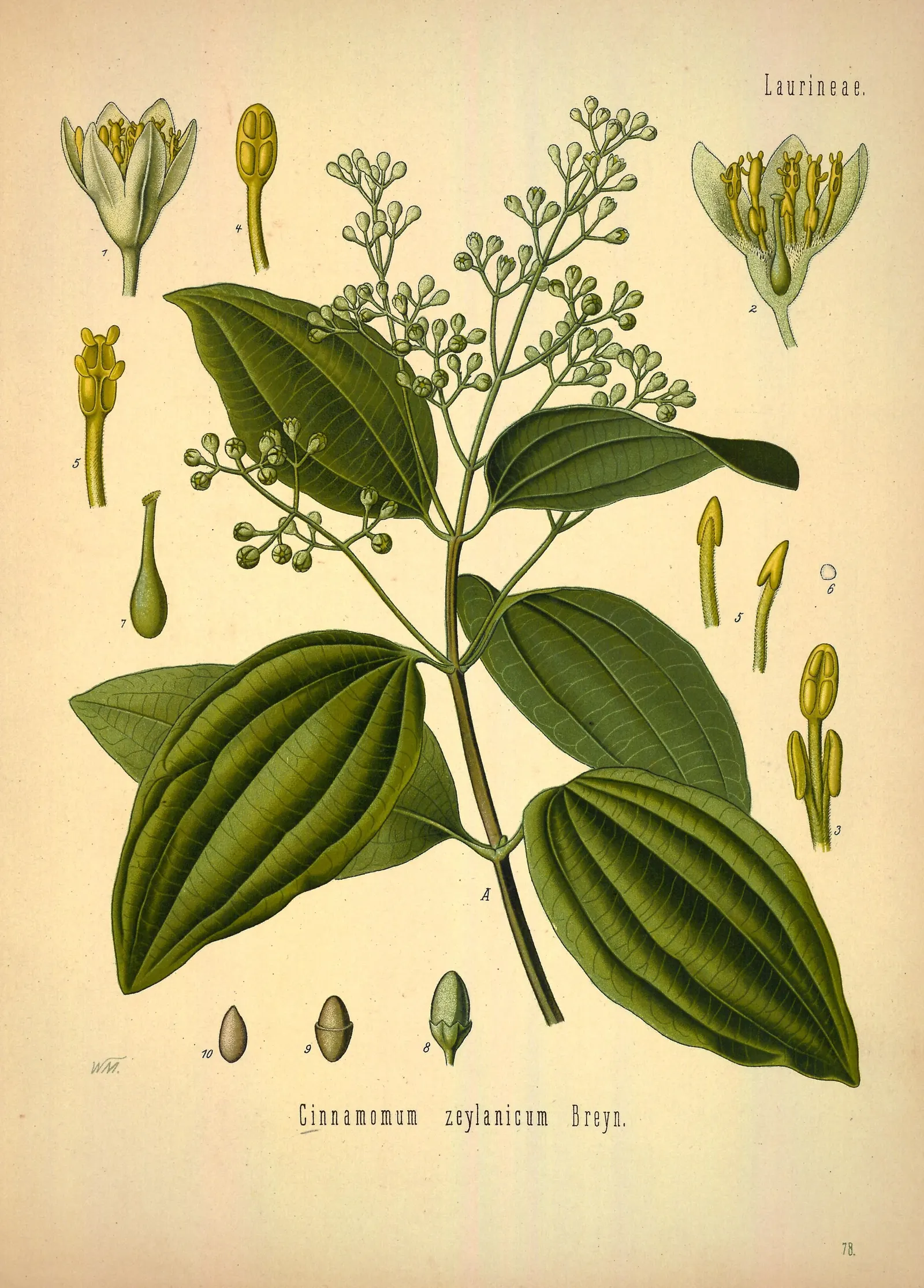
_BHL303720.jpg)
Is Saigon cinnamon real cinnamon, then? It is a Cinnamomum species, and US regulations list it as a cinnamon: “Cinnamon, Saigon” and “Cassia, Saigon” both appear in the federal list of spices, under Cinnamomum loureirii (an older spelling).3 “True cinnamon” is a market name for one species, C. verum, not a test the others fail.
How to read the comparison
Each number in the table above comes from a named study, and most are single samples. Natural products vary: the same species can differ by region, tree age, and even between two pieces of bark from one tree.8 Use the table to understand which species sits behind each label, not to predict what is in a particular jar.
If a label says only “cinnamon”, the species is not stated. In US samples tested by researchers, unlabelled cinnamon was most likely a cassia — probably Indonesian C. burmannii.1
Coumarin in Ceylon, Saigon and cassia cinnamon: the published numbers
Coumarin is a natural fragrant compound in cinnamon bark, and it is where the species differ most sharply in published measurements.
| Dimension | Ceylon (C. verum) | Cassia group |
|---|---|---|
| Wang et al. 2013 (US), authenticated bark | 17 mg/kg1,7 | C. cassia 310 · C. burmannii 2,140 · C. loureiroi 6,970 mg/kg1,7 |
| Wang et al. 2013, commercial bark | 13 mg/kg (US) · 7–900 mg/kg (Sri Lanka)1,7 | C. cassia 85–262 (US) · C. burmannii 3,990–9,300 (US) · C. loureiroi 1,060 (Vietnam) mg/kg1,7 |
| Woehrlin et al. 2010 (German retail), powder | Below detection – 297 mg/kg8,7 | 1,740–7,670 mg/kg (species not separated)8,7 |
| Woehrlin et al. 2010, sticks | Below detection and 486 mg/kg8,7 | Below detection – 9,900 mg/kg8,7 |
| BfR summary (2012) | Low levels9 | Average about 3,000 mg/kg; highest measured about 10,000 mg/kg9 |
Why one number per species is misleading
A German study of cassia bark found very large variation within two packs of sticks, and in bark taken directly from trees in Indonesia it found high coumarin in one tree and none detectable in two others. The authors concluded that “coumarin levels in cassia cinnamon can vary widely even within a single tree”.8
The ranking among the cassia species is not stable either. An authenticated C. cassia sample measured 310 mg/kg, lower than a commercial C. loureiroi sample from Vietnam at 1,060 mg/kg.1,7 What holds across every source is the order of magnitude: Ceylon in the tens of mg/kg, the cassia group in the hundreds to thousands.
What regulators have set
The European Food Safety Authority set a tolerable daily intake (TDI) for coumarin of 0.1 mg per kg of body weight per day — a reference value for lifetime exposure, first set in 2004 and confirmed in 2008.10,9
The EU does not limit coumarin in cinnamon itself. Regulation (EC) No 1334/2008 limits it in foods made with cinnamon: 50 mg/kg in traditional and seasonal bakery ware that mentions cinnamon on the label, 20 mg/kg in breakfast cereals, 15 mg/kg in other fine bakery ware and 5 mg/kg in desserts.11 The limits have applied since January 2011.9
In the United States, food with added coumarin is treated as adulterated; coumarin that occurs naturally in cinnamon is not covered by that rule.12,1 Canada has no established tolerance and assesses elevated levels case by case.13
We do not convert these reference values into teaspoons or grams of cinnamon. For how coumarin is measured and why results vary, see coumarin in cinnamon.
What’s the difference between Vietnamese cinnamon and regular cinnamon?
“Regular cinnamon” in the United States is not one species. Researchers who tested US retail cinnamon and cinnamon in foods and supplements concluded that it was probably Indonesian cassia, C. burmannii.1 Vietnamese cinnamon is usually sold as C. loureiroi. Both are cassias; neither is Ceylon.
The measurable difference between them is oil. In one study of nine bark samples from three species, Saigon bark had the highest essential-oil yield, 3.08%, and its oil was 81.97% trans-cinnamaldehyde, the compound behind cinnamon’s characteristic aroma.6
Korintje (Indonesian) cinnamon vs Saigon and Ceylon
Korintje is Cinnamomum burmannii, also sold as Indonesian cinnamon and, in US regulations, as Padang or Batavia cassia.3 It comes mainly from Kerinci in Sumatra.2 In the comparison of Ceylon vs Korintje vs Vietnamese cinnamon above, Korintje sits with Saigon in the cassia group, and its authenticated sample measured 2,140 mg/kg coumarin against Saigon’s 6,970.1,7
Does a “Vietnamese cinnamon” label always mean C. loureiroi?
Not necessarily. A 2004 field survey in Vietnam suggested that bark from Trà My, in Quảng Nam, comes from C. loureiroi, while bark from Yên Bái may come from C. cassia; the two looked alike and the Trà My bark contained much more oil.14 “Vietnamese” on a label tells you the country, not always the species. Where and how each is grown is covered in our Vietnamese cinnamon guide.
Cassia vs Ceylon cinnamon
Cassiain the spice trade
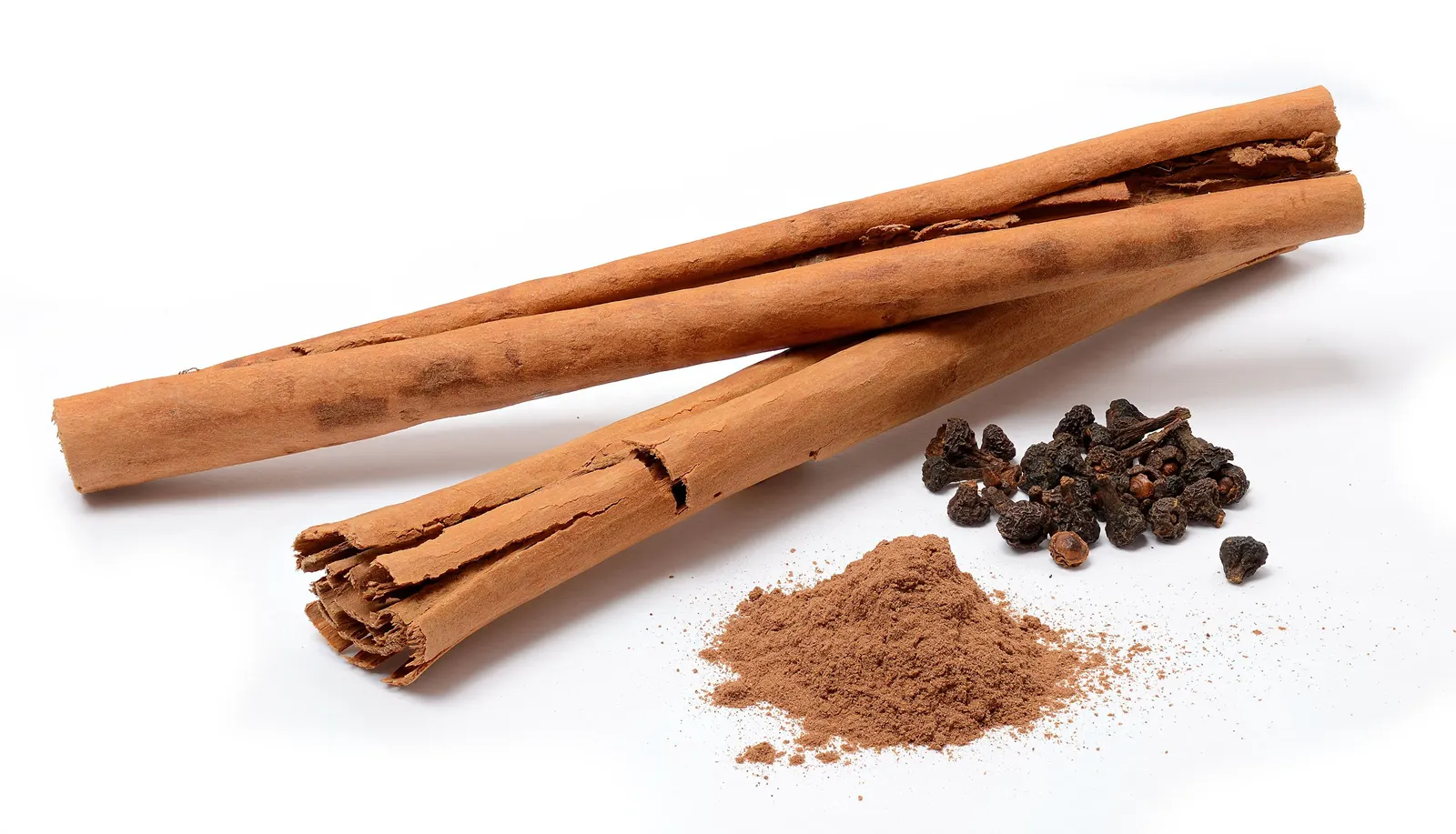
Cinnamon bark from Cinnamomum species other than Ceylon cinnamon. The ISO trade standard for cassia covers three of them in one specification: Chinese, Indonesian and Vietnamese.5
The comparison most shoppers meet is Ceylon against the whole cassia group. Three things separate them. The bark: Ceylon quills are rolled from many thin layers, while cassia is a single hard layer about 2–3 mm thick.2 Coumarin: tens of mg/kg against hundreds to thousands (see the table above). And the oil: Ceylon contains eugenol in notable amounts, and Chinese cassia more α-guaiene than the other species studied.6

You may also see Cinnamomum zeylanicum on labels and in older regulations. It is a synonym of C. verum.3
Ceylon vs Saigon cinnamon taste
Taste is not something a source can measure for you, so we stay with what was measured. Saigon bark had the highest oil content of the three species in one study, and its oil was mostly trans-cinnamaldehyde;6 it is generally described as the stronger of the two. Ceylon’s oil contains eugenol in notable amounts — the main compound of clove.6 We give no substitution ratio and no recipe.
How to spot fake Ceylon cinnamon?
With sticks, look at the layers. Ceylon quills are many thin, papery layers, light brown and crumbly; cassia is one thick, hard, woody layer.2
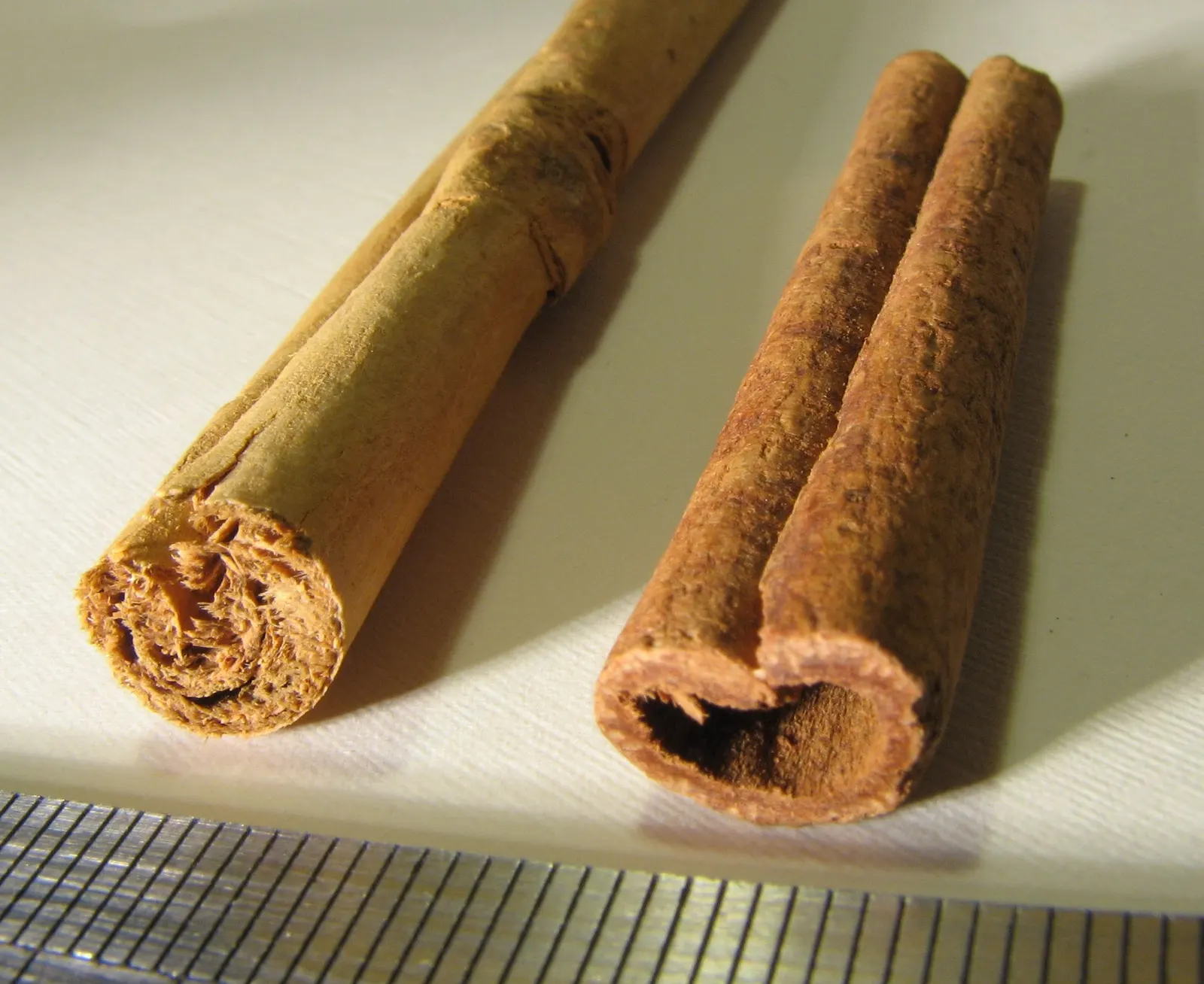

Ground cinnamon cannot be judged by eye. Researchers needed laboratory chromatography to tell the species apart in powders,1 so the only practical check is a label that names the species, Cinnamomum verum. We do not recommend home tests that circulate online; none we found has a published basis.
Where Saigon cinnamon comes from
“Saigon” is a trade name, from the port through which the bark was shipped, not the place it grows; the trees grow far to the north.15 Growing areas, harvest seasons, grades and exports are in how Saigon cinnamon is grown and harvested.
What this page does not cover
This page compares cinnamon species by composition and published measurements. It does not give health or dietary advice, and it does not say how much cinnamon anyone should eat. Questions such as which cinnamon is “healthiest”, who should avoid cassia, or how cinnamon interacts with medication are medical questions; please ask a doctor or pharmacist. We have not tested any brand or sample ourselves.
Frequently asked questions
How to spot fake Ceylon cinnamon?
With sticks, look at the layers: Ceylon quills are many thin, papery layers that crumble, while cassia is one hard layer about 2–3 mm thick. Powder cannot be judged by eye, so rely on a label that names Cinnamomum verum. We do not recommend home “tests”.
What's the difference between Vietnamese cinnamon and regular cinnamon?
“Regular” cinnamon in US samples tested by researchers was most likely Indonesian C. burmannii. Vietnamese cinnamon is usually sold as C. loureiroi, which had the highest bark oil content in the one study that measured it. Both are cassias, not Ceylon.
Is Kirkland, Saigon cinnamon, cassia or Ceylon?
Any product labelled “Saigon cinnamon” is by definition a cassia (C. loureiroi), not Ceylon. We have not tested any brand, and say nothing about any brand’s sourcing.
Is Costco Saigon cinnamon the same as Ceylon cinnamon?
No. Saigon cinnamon and Ceylon cinnamon are different species, whatever the brand; the label logic is the same for every retailer.
How do I tell if my cinnamon is ceylon or cassia?
Check the species on the label. For sticks, use the layer test described in How to spot fake Ceylon cinnamon?
Can I substitute Saigon cinnamon for regular cinnamon?
Both are cassias with cinnamaldehyde as the main flavour compound. Saigon bark had the highest oil content in one study, so it is generally described as stronger. We give no ratio and no recipe.
Image credits
- “Köhler's Medizinal-Pflanzen in naturgetreuen Abbildungen mit kurz erläuterndem Texte (Plate 78) BHL303720” by Walther Müller (plate signed “W.M.”), in F. E. Köhler, Köhler’s Medizinal-Pflanzen (1887); scan: Biodiversity Heritage Library, via Wikimedia Commons, licensed Public domain. Resized; converted to WebP.
- “Cinnamomum verum spices” by Simon A. Eugster, via Wikimedia Commons, licensed CC BY-SA 3.0. Resized; converted to WebP.
- “Cinnamomum verum vs Cinnamomum burmanni” by Antti Vähä-Sipilä, via Wikimedia Commons, licensed CC BY-SA 1.0 fi. Resized; converted to WebP.
Sources
- 1
Abstract read. Per-species coumarin values are taken from the review by Lončar et al. (2020), Table 4, which reproduces them.
- 2
Bark description (Ceylon quills vs cassia bark), trade names. Used for description only.
- 3
21 CFR 182.10 — Spices and other natural seasonings and flavorings
Lists “Cassia, Saigon” and “Cinnamon, Saigon” as Cinnamomum loureirii Nees.
- 4
Used for names and history only, never for numbers.
- 5
Title and status only. The standard is paid; its numeric limits are not reproduced here. ISO/FDIS 6538 has been at stage 50.00 since 2026-09-11.
- 6
One study, nine samples of three species.
- 7
Coumarins in Food and Methods of Their Determination
Table 4, “Coumarin content on cinnamon and cinnamon-containing foods”, read twice; values match.
- 8
Abstract read; ranges as reproduced in Lončar et al. (2020), Table 4.
- 9
FAQ on coumarin in cinnamon and other foods
Also the source for the date EU maximum levels began to apply (January 2011). Read together with BfR Health Assessment No. 043/2006.
- 10
Coumarin in flavourings and other food ingredients with flavouring properties
The publisher returned 403. The TDI and its 2004 origin are cited through BfR and Lončar et al. (2020).
- 11
Regulation (EC) No 1334/2008, Annex III Part B
Maximum levels of coumarin in foods made with cinnamon. EUR-Lex did not return content to automated access.
- 12
Food with added coumarin is adulterated (order of 5 March 1954). Naturally occurring coumarin is not covered.
- 13
Coumarin in Cinnamon, Cinnamon-Containing Foods and Licorice
Used only for the statement that Canada has no established tolerance. The survey figures on this page appear to carry a unit error (ppb) and are not used.
- 14
Field Survey of Cinnamon in Viet Nam
The authors write that the attribution of Yên Bái bark to C. cassia “might be suggested”; we report it as a suggestion, not a finding.
- 15
Vietnamese cassia (Cinnamomum loureiroi)
Trade-name history (Saigon as the port), João de Loureiro, bark oil range.