Explainer
Cassia Cinnamon: Three Species, One Trade Name
One trade word, three species from three countries — one of them Vietnam. Here is what “cassia” means in the spice trade and in regulation, and why it is still cinnamon.
Cassia cinnamon is not one spice but three. Chinese cassia (Cinnamomum cassia), Indonesian cassia (C. burmannii) and Vietnamese cassia (C. loureiroi, sold as Saigon cinnamon) are, in a US laboratory’s words, “commonly known as cassia” — and all three are sold in the United States as cinnamon.1
What is cassia cinnamon?
Cassiain the spice trade
Cinnamon bark from Cinnamomum species other than Ceylon cinnamon (C. verum). The international trade standard for cassia covers three species in one specification: the Chinese, Indonesian and Vietnamese types.2
The other side of the word is “true cinnamon”, the market name for the dried inner bark of C. verum, grown mainly in Sri Lanka.1,3 On US shelves, cassia is what researchers found: after testing locally bought cinnamon, cinnamon-flavoured foods and supplements, they concluded it was probably Indonesian cassia.1
Where does cassia cinnamon come from?
Each cassia takes its everyday name from its main producing country.
| Species | Common trade names | ISO 6538 type | Main producing country |
|---|---|---|---|
| Cinnamomum cassia (ISO: C. aromaticum, syn. C. cassia) | Chinese cassia, Chinese cinnamon4 | Chinese type2 | China3; also grown in Vietnam5 |
| Cinnamomum burmannii | Korintje, Indonesian cinnamon, Padang or Batavia cassia4,3 | Indonesian type2 | Indonesia, centred on Kerinci in Sumatra6,3 |
| Cinnamomum loureiroi (older spelling C. loureirii) | Saigon cinnamon, Vietnamese cinnamon, Vietnamese cassia7,4 | Vietnamese type2 | Vietnam7 |
Country names are a shorthand, not a guarantee of species. Vietnam grows C. cassia as well as C. loureiroi,5 and “Saigon” is a trade name taken from the port the bark was shipped through: the trees grow far to the north.8 Most Indonesian cinnamon comes from Sumatra and is cassia.6
ISO 6538: one standard, three types
The trade standard that defines cassia is ISO 6538:1997, Cassia, Chinese type, Indonesian type and Vietnamese type — Specification. Its full title names the three species: Cinnamomum aromaticum (syn. C. cassia), C. burmanii and C. loureirii.2 A third edition reached the final-draft approval stage on 11 September 2026 and will replace the 1997 text.2
Vietnam adopted the 1997 standard unchanged as its national standard TCVN 8957:2011, titled in Vietnamese “Quế Việt Nam, quế Indonesia, quế Trung Quốc”.9 Ceylon cinnamon is covered by a separate standard, ISO 6539, according to CBI, the Dutch import-promotion agency.6
In European trade, the European Spice Association’s non-binding quality minima ask for at least 0.7–1.0 ml of volatile oil per 100 g of unprocessed cinnamon, depending on the botanical species, with reference to ISO 6538 and ISO 6539.6
How US regulations name cassia
US federal regulations list spices “generally recognized as safe for their intended use”. The cinnamon entries name each cassia twice in some cases — once as cassia, once as cinnamon:4
| Common name in the regulation | Botanical name in the regulation |
|---|---|
| Cassia, Chinese | Cinnamomum cassia Blume |
| Cassia, Padang or Batavia | Cinnamomum burmanni Blume |
| Cassia, Saigon | Cinnamomum loureirii Nees |
| Cinnamon, Ceylon | Cinnamomum zeylanicum Nees |
| Cinnamon, Chinese | Cinnamomum cassia Blume |
| Cinnamon, Saigon | Cinnamomum loureirii Nees |
Source for every row: 21 CFR 182.10.4 The spellings are the regulation’s own; C. zeylanicum is a synonym of C. verum, Ceylon cinnamon.4 Indonesian cassia appears only as “Cassia, Padang or Batavia”, but it is still sold as cinnamon.1
Is cassia cinnamon real cinnamon?
Yes, in trade and regulatory terms. All three cassias are Cinnamomum bark, US regulations name two of them as “cinnamon” outright, and a US laboratory study notes that all three are sold in the United States as cinnamon.4,1
“True cinnamon” is the market name of one species, C. verum.1 It describes a species, not a quality test that the cassias fail.
What cassia bark looks like
Cassia is sold as a single layer of bark, about 2–3 mm thick in Chinese cassia, hard and woody; Ceylon quills are rolled from many thin layers.3 In ground form the species cannot be told apart by eye: researchers needed laboratory chromatography to identify them.1
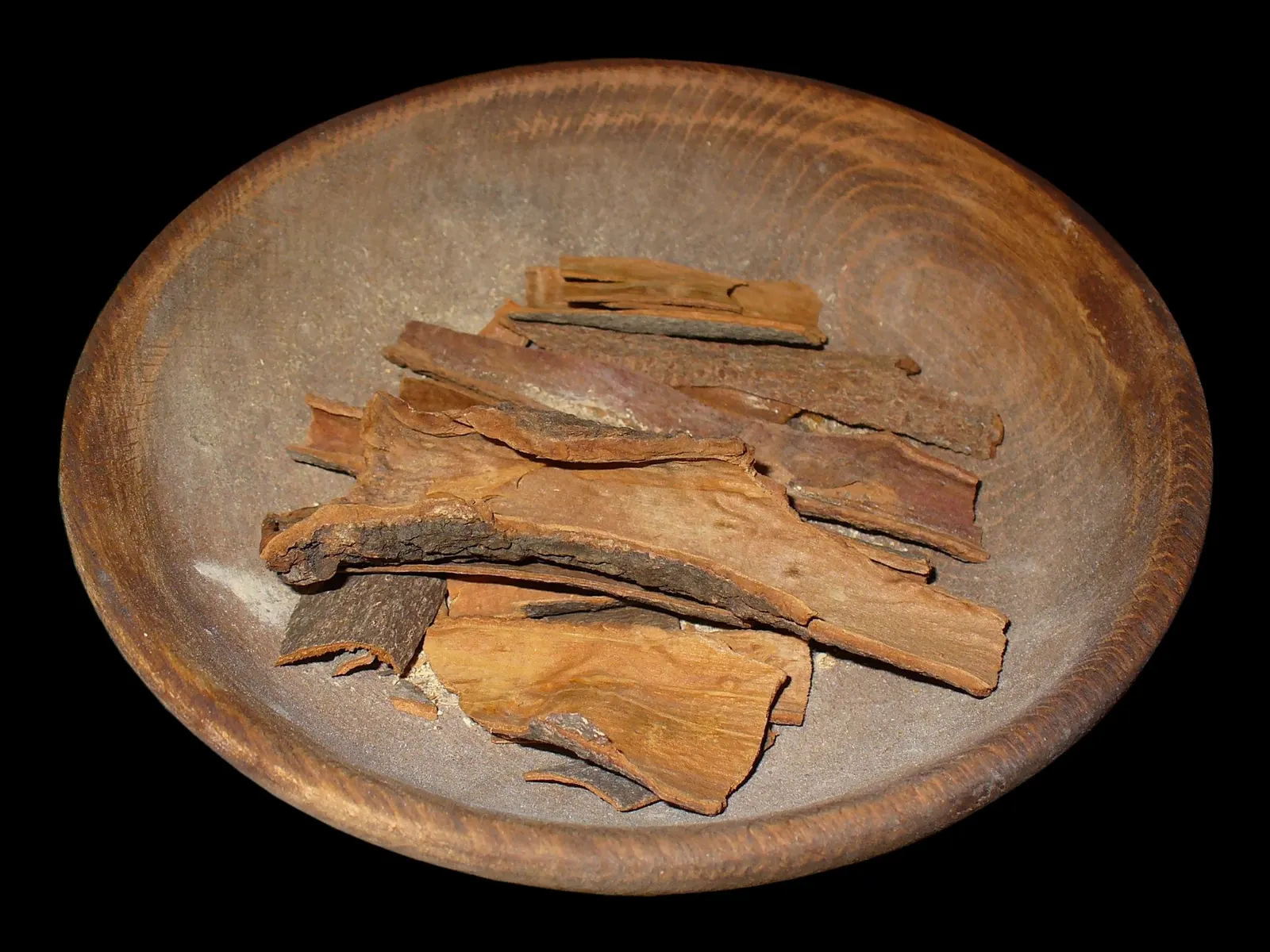

Producing countries grade cassia by their own national rules. Indonesian cassia, for example, has seven main grades, from “Cassia Vera AA” to “Cassia KC”, differing mainly in colour, moisture and volatile oil.6 Vietnam’s bark grades are described in our Vietnamese cinnamon guide.
How cassia differs from Ceylon cinnamon
The sharpest measured difference is coumarin: Ceylon bark in published samples mostly measures in the tens of mg/kg, cassia in the hundreds to thousands.1,10 CBI describes cassia bark as coarser and less fragrant than Ceylon, but more affordable.6 The full side-by-side comparison is on Ceylon vs Saigon cinnamon, and the coumarin figures, methods and rules are on coumarin in cinnamon.
Vietnam’s cassia
Vietnam grows two of the three cassias. C. loureiroi is the species behind “Saigon cinnamon”, and its bark had the highest essential-oil yield, 3.08%, of three species compared in one study.7,11 A 2004 field survey suggested that bark from Trà My, in Quảng Nam, comes from C. loureiroi, while bark from Yên Bái may come from C. cassia.12 Vietnam’s own 2022 grower guidance names the cultivated tree C. cassia.13
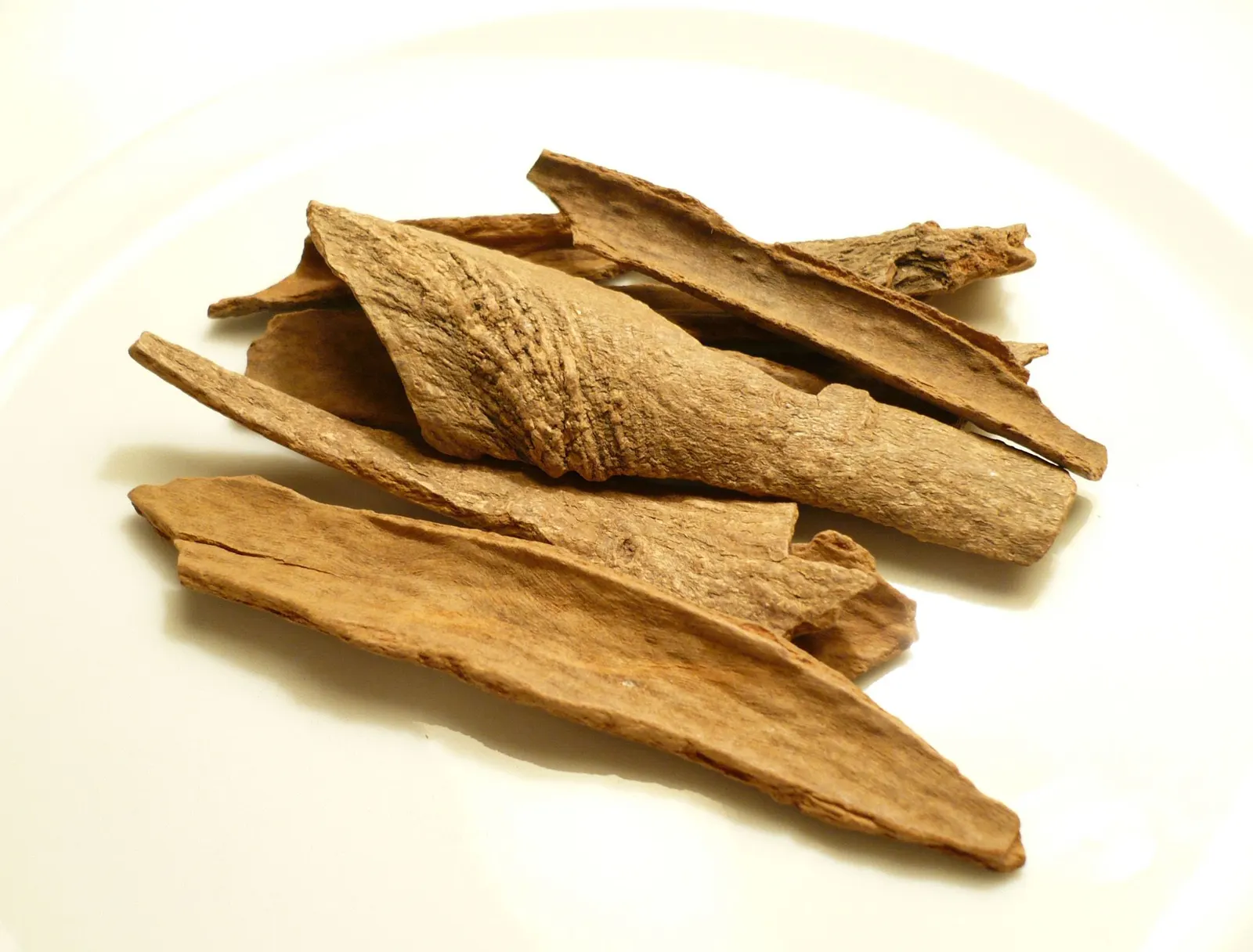

So “Vietnamese cinnamon” on a label names a country, which may stand for either species. Where Vietnam’s cinnamon grows, how it is harvested and graded, and where it is exported are in our guide to Vietnamese (Saigon) cinnamon.
What this page does not cover
This page explains what “cassia” means as a trade and regulatory term and which species it covers. It gives no health or dietary advice and does not rank cassia against Ceylon cinnamon for health; questions such as whether cassia is “healthier”, who should avoid it, or its effect on blood sugar are medical questions for a doctor or pharmacist. It gives no prices, names no suppliers, and we have not tested any brand or sample ourselves.
Frequently asked questions
Is cassia cinnamon real cinnamon?
Yes, in trade and regulatory terms. Cassia is the bark of Cinnamomum trees, and US federal regulations list Chinese, Padang or Batavia, and Saigon cassia as spices, two of them also under the name “cinnamon”. “True cinnamon” is the market name of one species, Ceylon (C. verum); it is not a test the cassias fail.
Image credits
- “Cinnamomum cassia 003” by H. Zell, via Wikimedia Commons, licensed CC BY-SA 3.0. Resized; converted to WebP.
- “Saigoncinnamon” by Badagnani, via Wikimedia Commons, licensed CC BY 3.0. Resized; converted to WebP.
Sources
- 1
Abstract read. Per-species coumarin values are taken from the review by Lončar et al. (2020), Table 4, which reproduces them.
- 2
Title and status only. The standard is paid; its numeric limits are not reproduced here. ISO/FDIS 6538 has been at stage 50.00 since 2026-09-11.
- 3
Bark description (Ceylon quills vs cassia bark), trade names. Used for description only.
- 4
21 CFR 182.10 — Spices and other natural seasonings and flavorings
Lists “Cassia, Saigon” and “Cinnamon, Saigon” as Cinnamomum loureirii Nees.
- 5
Những cây thuốc và vị thuốc Việt Nam — Cây quế
Botany only: which Cinnamomum species occur in Vietnam and the traditional curing of quế Thanh. The medicinal sections are not used.
- 6
Entering the European market for cinnamon
ESA quality minima, ASTA cleanliness, certifications, market structure. Places Vietnamese cinnamon in the “Central Highlands”, which MARD’s list of growing areas does not support; that statement is not used.
- 7
Used for names and history only, never for numbers.
- 8
Vietnamese cassia (Cinnamomum loureiroi)
Trade-name history (Saigon as the port), João de Loureiro, bark oil range.
- 9
TCVN 8957:2011 (ISO 6538:1997) Quế Việt Nam, quế Indonesia, quế Trung Quốc
Identical adoption of ISO 6538:1997. Numeric limits not read (paid text).
- 10
Coumarins in Food and Methods of Their Determination
Table 4, “Coumarin content on cinnamon and cinnamon-containing foods”, read twice; values match.
- 11
One study, nine samples of three species.
- 12
Field Survey of Cinnamon in Viet Nam
The authors write that the attribution of Yên Bái bark to C. cassia “might be suggested”; we report it as a suggestion, not a finding.
- 13
Hướng dẫn kỹ thuật trồng, chăm sóc, khai thác cây Quế (kèm Quyết định 14/QĐ-BNN-TCLN)
Technical guidance for growers: seed-source areas (III.1), harvest seasons (VI.2b), harvesting and bark grading (VIII), processing and packing (IX). Names the cultivated tree “Cinamomum cassia BL.” (sic).