Explainer
Coumarin in Cinnamon: What Is Measured, and What Is Regulated
A composition page. Every number here comes from a named study or regulator, most of them single samples — and the samples disagree more than most summaries admit.
Coumarin in cinnamon is a question about composition: which compound, how much of it, measured how, and what the rules say. Cassia bark — the group that includes Vietnamese (Saigon) cinnamon — carries far more of it than Ceylon bark, but the published numbers vary so widely that no single figure describes a species.1,2
What is coumarin in cinnamon?
Coumarin1,2-benzopyrone, C₉H₆O₂
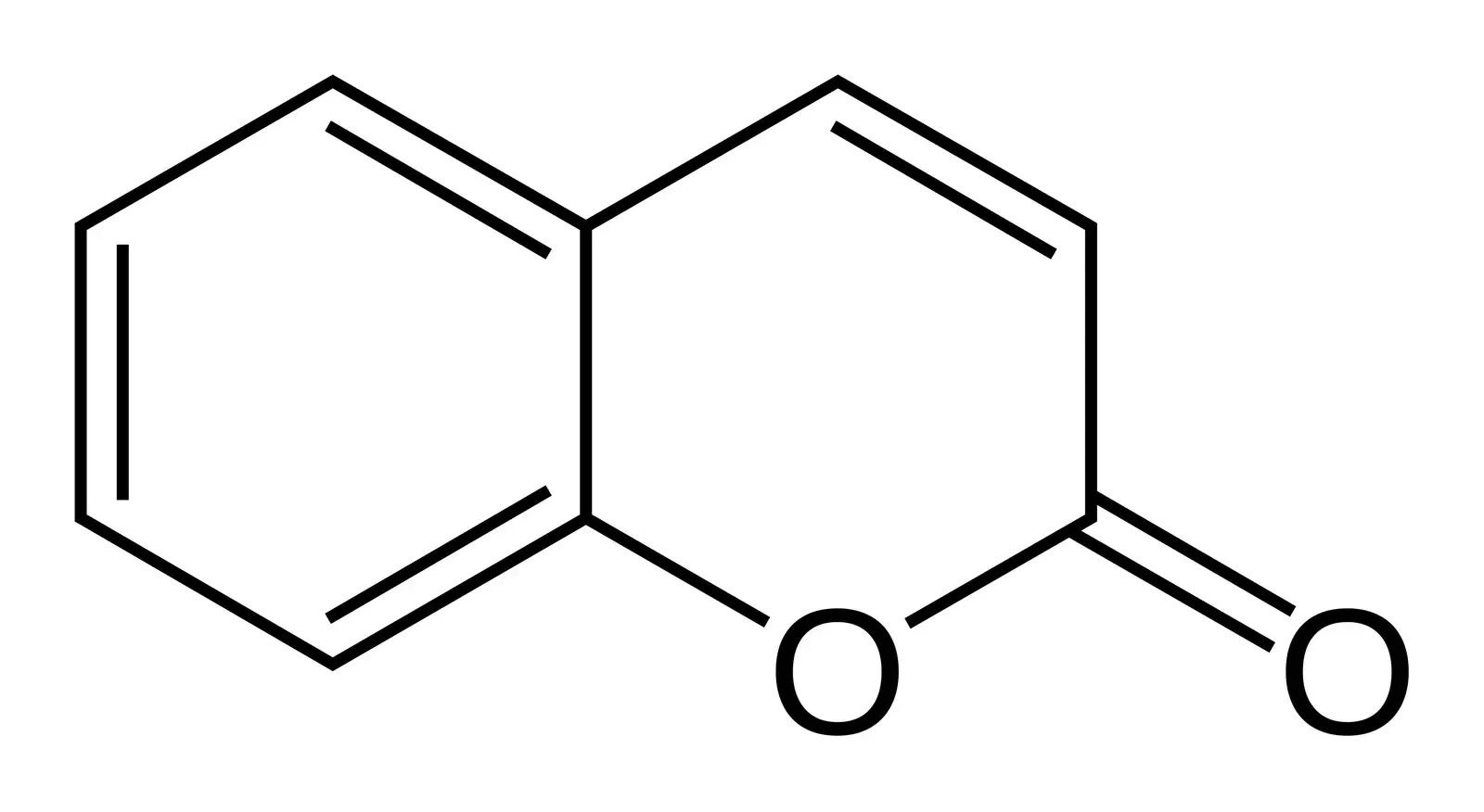

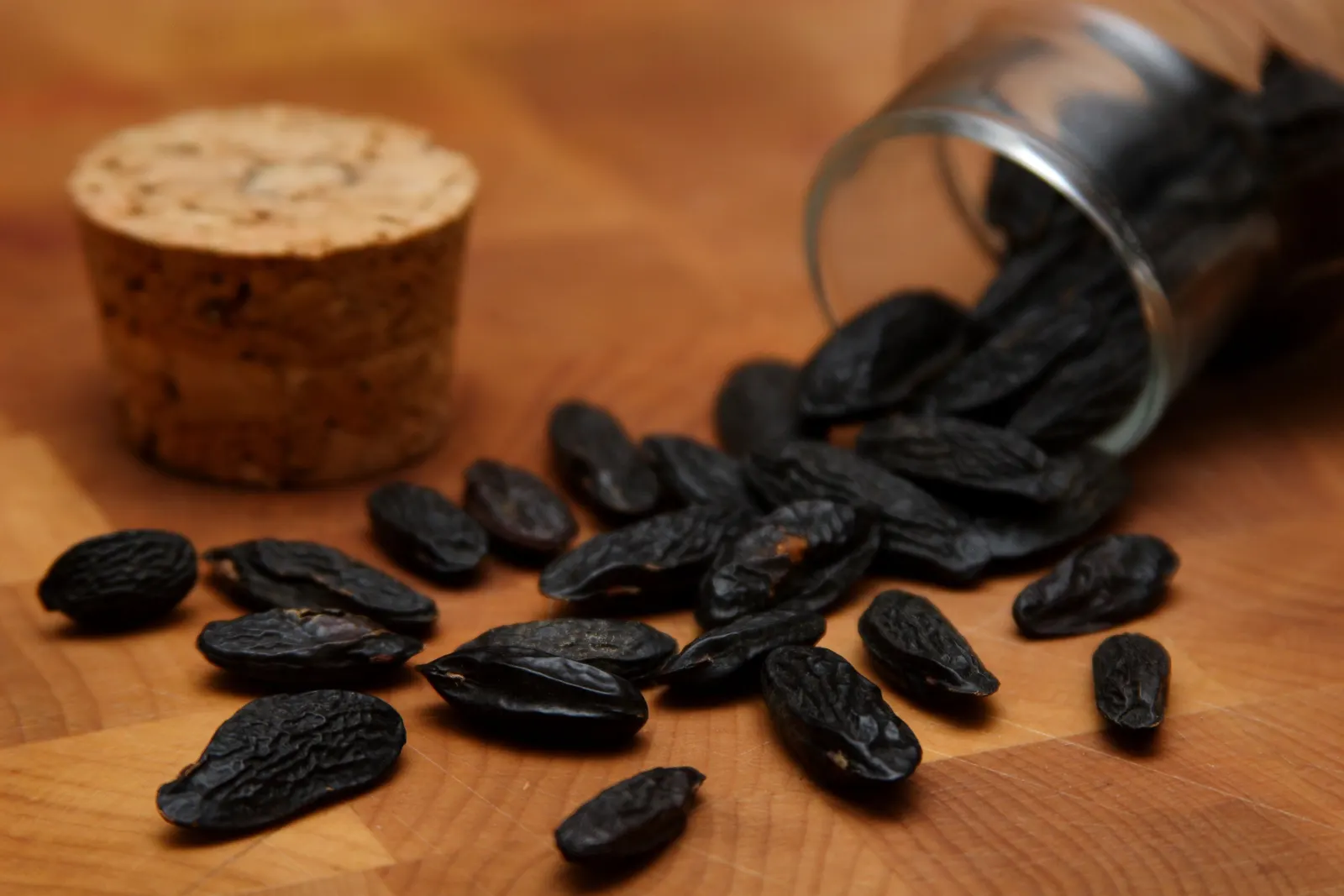
The name comes from coumarou, a French term for the tonka bean, from which coumarin was first isolated in 1820. It was later found in sweet clover, woodruff, cinnamon and several fruits, and its sweet odour is often compared to fresh hay, woodruff or vanilla.5
In cinnamon it is a natural constituent of the bark, not an additive. It occurs in relatively high concentrations in the varieties collectively known as cassia cinnamon.3 Cinnamon’s characteristic aroma comes from a different molecule, trans-cinnamaldehyde, which made up 66.28–81.97% of the bark oil in one study of nine samples from three species.6
How much coumarin is in cinnamon?
The table collects the published figures we use, by study. Each row is a different set of samples, analysed by a different laboratory.
| Dimension | Ceylon (C. verum) | Cassia group |
|---|---|---|
| Wang et al. 2013 (US), authenticated bark | 17 mg/kg1,5 | C. cassia 310 · C. burmannii 2,140 · C. loureiroi 6,970 mg/kg1,5 |
| Wang et al. 2013, commercial bark | 13 mg/kg (US) · 7–900 mg/kg (Sri Lanka)1,5 | C. cassia 85–262 (US) · C. burmannii 3,990–9,300 (US) · C. loureiroi 1,060 (Vietnam) mg/kg1,5 |
| Woehrlin et al. 2010 (German retail), powder | Below detection – 297 mg/kg2,5 | 1,740–7,670 mg/kg (species not separated)2,5 |
| Woehrlin et al. 2010, sticks | Below detection and 486 mg/kg2,5 | Below detection – 9,900 mg/kg2,5 |
| BfR summary (2012) | Low levels3 | Average about 3,000 mg/kg; highest measured about 10,000 mg/kg3 |
Read across the rows and one pattern holds: Ceylon (Cinnamomum verum) bark in the tens of mg/kg, cassia bark in the hundreds to thousands. The US study summed it up as “only traces” of coumarin in C. verum bark, against “substantial amounts” in all three cassia species.1
The German Federal Institute for Risk Assessment (BfR) gives an average of about 3,000 mg/kg for cassia cinnamon, with the highest measured levels around 10,000 mg/kg.3 For a sense of scale: mg/kg is parts per million, so 1,000 mg/kg is 0.1% of the bark’s weight.
Why do coumarin results vary so much?
Because the bark varies. A 2010 German study analysed 47 cinnamon powders from retail shops and confirmed high coumarin in cassia, then found “a huge variation” in sticks from just two packages: from below the limit of detection to about 10,000 mg/kg.2
The same team analysed bark taken directly from five cassia trees in Indonesia. One tree showed high variation between its own samples; in two others, no coumarin was detected at all. Their conclusion: “coumarin levels in cassia cinnamon can vary widely even within a single tree”.2
A 2020 review of coumarin in food lists the factors behind this: the botanical species, climate, and the conditions of collection and production all strongly influence the concentration of cinnamon’s compounds.5 Even the order among the cassia species shifts between sample sets — an authenticated Chinese cassia sample measured 310 mg/kg, a commercial Vietnamese sample 1,060 mg/kg.1,5
How is coumarin in cinnamon measured?
With chromatography, in a laboratory. Coumarin cannot be seen, and nothing about a stick or a powder shows how much it holds.
| Study | Method | What was analysed |
|---|---|---|
| Wang et al. 2013 (US) | A validated UPLC-UV/MS method1 | Authenticated bark of four species; locally bought cinnamon; cinnamon-flavoured foods; cinnamon food supplements1,5 |
| Woehrlin et al. 2010 (Germany) | An HPLC method measuring coumarin, cinnamaldehyde, cinnamic acid, cinnamyl alcohol and eugenol in one run2 | 47 retail powders; sticks from two packages; bark from five trees in Indonesia2 |
Across food testing generally, high-performance liquid chromatography (HPLC) is the most commonly used method; gas chromatography–mass spectrometry and HPLC with UV, fluorescence or mass-spectrometric detection are also used.5 Sample preparation matters: the same review reports methanol as the most effective extraction solvent, and the amount of sample and the solvent concentration as the biggest influences on how much coumarin is extracted.5
Measurement also identifies species. The US team used the chemical profiles of shop-bought cinnamon to conclude that it was probably Indonesian cassia, C. burmannii.1 In trade, laboratories test for fraud as well: CBI, the Dutch import-promotion agency, names tonka beans — high in coumarin — as a potential adulterant of ground cinnamon.7

What regulators have set for coumarin
European Union
The European Food Safety Authority set a tolerable daily intake (TDI) for coumarin of 0.1 mg per kg of body weight per day, first set in 2004 and confirmed in 2008.8,3 It is a reference value used by regulators; we do not convert it into amounts of cinnamon.
Regulation (EC) No 1334/2008 lists coumarin among substances that shall not be added as such to food, and sets maximum levels for it in foods made with cinnamon:9
| Food | Maximum coumarin |
|---|---|
| Traditional and/or seasonal bakery ware containing a reference to cinnamon in the labelling | 50 mg/kg9 |
| Breakfast cereals including muesli | 20 mg/kg9 |
| Fine bakery ware, with the exception of traditional and/or seasonal bakery ware containing a reference to cinnamon in the labelling | 15 mg/kg9 |
| Desserts | 5 mg/kg9 |
These limits have applied since January 2011. There is no limit for coumarin in cinnamon itself.3 Exporters still feel them: CBI advises suppliers that bulk cinnamon with very high coumarin levels can be rejected at the EU border, and that the limits on finished products affect customs checks on cinnamon supplies.7
United States
Food containing any added coumarin — as such, or through tonka beans or tonka extract — is deemed adulterated, under an order published on 5 March 1954.4 Coumarin reaching food from other natural ingredients, such as cinnamon, is not regulated.1
Canada
Canada has no established tolerance for coumarin in cinnamon; elevated levels are assessed case by case.10
Coumarin in Saigon (Vietnamese) cinnamon
Saigon cinnamon, Cinnamomum loureiroi, is one of the three cassias, and in the US study it was one of the two with the most coumarin.1 Its authenticated bark sample measured 6,970 mg/kg — the highest authenticated figure in that study — and a commercial bark sample from Vietnam 1,060 mg/kg.1,5
Two figures, from one laboratory, are not a profile of Vietnam’s crop. The within-tree variation found in Indonesian cassia is a reason to expect a wide spread here too.2 And “Vietnamese” does not always mean C. loureiroi: a 2004 field survey suggested that bark from Yên Bái may come from C. cassia, while bark from Trà My, in Quảng Nam, comes from C. loureiroi.11 Where each is grown is covered in our Vietnamese cinnamon guide.
What a cinnamon label can tell you about coumarin
A label that names the species tells you the group, and the group suggests the order of magnitude. In the published samples, “Ceylon” (Cinnamomum verum) bark mostly measured in the tens of mg/kg, and the cassias — sold as “Saigon”, “Vietnamese”, “Korintje” or plain “cassia” — in the hundreds or thousands.1,2,5 Some products state “Ceylon cinnamon” explicitly on the pack.3
A label does not tell you the amount in that jar, given the variation above. If it says only “cinnamon”, the species is not stated; in US samples tested by researchers, that cinnamon was probably Indonesian cassia.1 How the species differ in other respects is in Ceylon vs Saigon cinnamon, and what “cassia” means in trade is in cassia cinnamon.
What this page does not cover
This page reports coumarin as a measured constituent of cinnamon bark and the rules regulators have written about it. It gives no health or dietary advice: it does not say how much cinnamon is safe to eat, who should avoid it, or what coumarin does in the body. Those are medical questions; please ask a doctor or pharmacist. We have not tested any brand or sample ourselves.
Frequently asked questions
How do I know if my cinnamon has coumarin?
Not by sight or smell: coumarin is measured in a laboratory, usually by liquid chromatography. In one US study it was detected in every locally bought cinnamon sample. A label that names the species tells you the group — Ceylon (C. verum) bark measures in the tens of mg/kg, cassia in the hundreds to thousands — but not the amount in a particular jar.
Image credits
- “Coumarin” by Fvasconcellos, via Wikimedia Commons, licensed Public domain. Rendered from SVG by Wikimedia, flattened onto white and resized; converted to WebP.
- “Tonka Beans” by Fred Benenson (Mecredis), via Wikimedia Commons, licensed CC BY-SA 3.0. Resized; converted to WebP.
Sources
- 1
Abstract read. Per-species coumarin values are taken from the review by Lončar et al. (2020), Table 4, which reproduces them.
- 2
Abstract read; ranges as reproduced in Lončar et al. (2020), Table 4.
- 3
FAQ on coumarin in cinnamon and other foods
Also the source for the date EU maximum levels began to apply (January 2011). Read together with BfR Health Assessment No. 043/2006.
- 4
Food with added coumarin is adulterated (order of 5 March 1954). Naturally occurring coumarin is not covered.
- 5
Coumarins in Food and Methods of Their Determination
Table 4, “Coumarin content on cinnamon and cinnamon-containing foods”, read twice; values match.
- 6
One study, nine samples of three species.
- 7
Entering the European market for cinnamon
ESA quality minima, ASTA cleanliness, certifications, market structure. Places Vietnamese cinnamon in the “Central Highlands”, which MARD’s list of growing areas does not support; that statement is not used.
- 8
Coumarin in flavourings and other food ingredients with flavouring properties
The publisher returned 403. The TDI and its 2004 origin are cited through BfR and Lončar et al. (2020).
- 9
Regulation (EC) No 1334/2008, Annex III Part B
Maximum levels of coumarin in foods made with cinnamon. EUR-Lex did not return content to automated access.
- 10
Coumarin in Cinnamon, Cinnamon-Containing Foods and Licorice
Used only for the statement that Canada has no established tolerance. The survey figures on this page appear to carry a unit error (ppb) and are not used.
- 11
Field Survey of Cinnamon in Viet Nam
The authors write that the attribution of Yên Bái bark to C. cassia “might be suggested”; we report it as a suggestion, not a finding.