Comparison
Japanese Star Anise vs Chinese Star Anise: How to Tell Them Apart
Two species of one genus with near-identical dried fruit, and only one of them is the spice. What differs, why the eye cannot settle it, and what a laboratory and a buyer can do instead.
| Dimension | Star anise (Chinese or Vietnamese)Illicium verum | Japanese star anise (shikimi)Illicium anisatum |
|---|---|---|
| Other names | Star anise, Chinese star anise1 | Shikimi (Japanese); synonym Illicium religiosum Siebold & Zucc.; also listed as I. japonicum, shikimmi and skimmi2,3 |
| FamilySame genus and family: the fruits “resemble each other closely”. | Schisandraceae (Illiciaceae in older references)1,4 | Schisandraceae (Illiciaceae in older references)2,5 |
| Native rangeOrigin documents help; they do not prove species. | Southern China (Fujian, Guangdong, Guangxi, Yunnan) and Vietnam1 | Japan (western Honshu, Kyushu, Shikoku, Ryukyu Islands), South Korea, Taiwan. Does not occur naturally in South-East Asia2,5PROSEA (2001) also lists southern China, wild and cultivated |
| US food status | Listed in 21 CFR 182.10 as “Anise, star” and “Star anise”. FDA: GRAS when used as a spice or flavoring6,7 | Not GRAS. FDA (2003): “should be used for decorative purposes only”7 |
| FruitA hint only. FDA: not reliable once dried or processed. | (5–)8(–13) boat-shaped follicles in a star; each follicle 1–2 cm, rough, rigid, reddish-brown, one seed. TCVN 8852: usually eight boat-shaped follicles, 12–15 mm long4,8 | 2.5–3 cm across, 7–8 follicles. Smaller than I. verum; often not a regular star because some carpels abort; follicles not swollen in the middle5 |
| Tip of each follicleA hint only. | An acute summit, tapering to a nearly straight beak (1918 description)9 | More pointed at the apex5 |
| Seed | Subcylindrical to compressed ovoid, 8–9 × 6 mm, smooth, glossy, light brown4 | Obovate-ellipsoid, 6–7 mm long, smooth, glossy, yellowish5 |
| Odour and volatile compoundsSupportive. A laboratory GC-MS profile is decisive; the nose is not. | Anise-like. (E)-anethole 57.6–77.1% of the volatiles from the pericarp; foeniculin present4,10 | Balsamic, not anise-like. (E)-anethole ≤ 16.0%; asaricin, methoxyeugenol and two other eugenol derivatives, found in none of the other 7 species tested5,10 |
| AnisatinThe decisive marker in laboratory testing. | A much weaker signal: about 250× (plant-spray MS) to more than 1,000× (DART-HRMS) lower than in I. anisatum11,12Not “anisatin-free” | Present: anisatin is isolated from this species, and an official control laboratory measured high levels13,14 |
| Safrole in the essential oilA marker for buyers of essential oil. | Not detected in one applicant’s star anise oil (limit of detection 0.01%)15 | “A typical component of the oil from shikimi fruit”15 |
| Main use | Spice and flavouring6,1 | Leaves burned as incense in Japan; ornamental; flowering twigs used as cut flowers in Japanese cemeteries and Buddhist temples16,2,5 |
The short version
Japanese star anise (Illicium anisatum, called shikimi in Japan) is a different plant from the star anise sold as a spice, Illicium verum, often called Chinese star anise. In the United States only I. verum is listed as a spice, and the FDA has said that Japanese star anise is not generally recognized as safe (GRAS). Dried, the two look almost the same: the FDA says they cannot be told apart “through visual examination”.
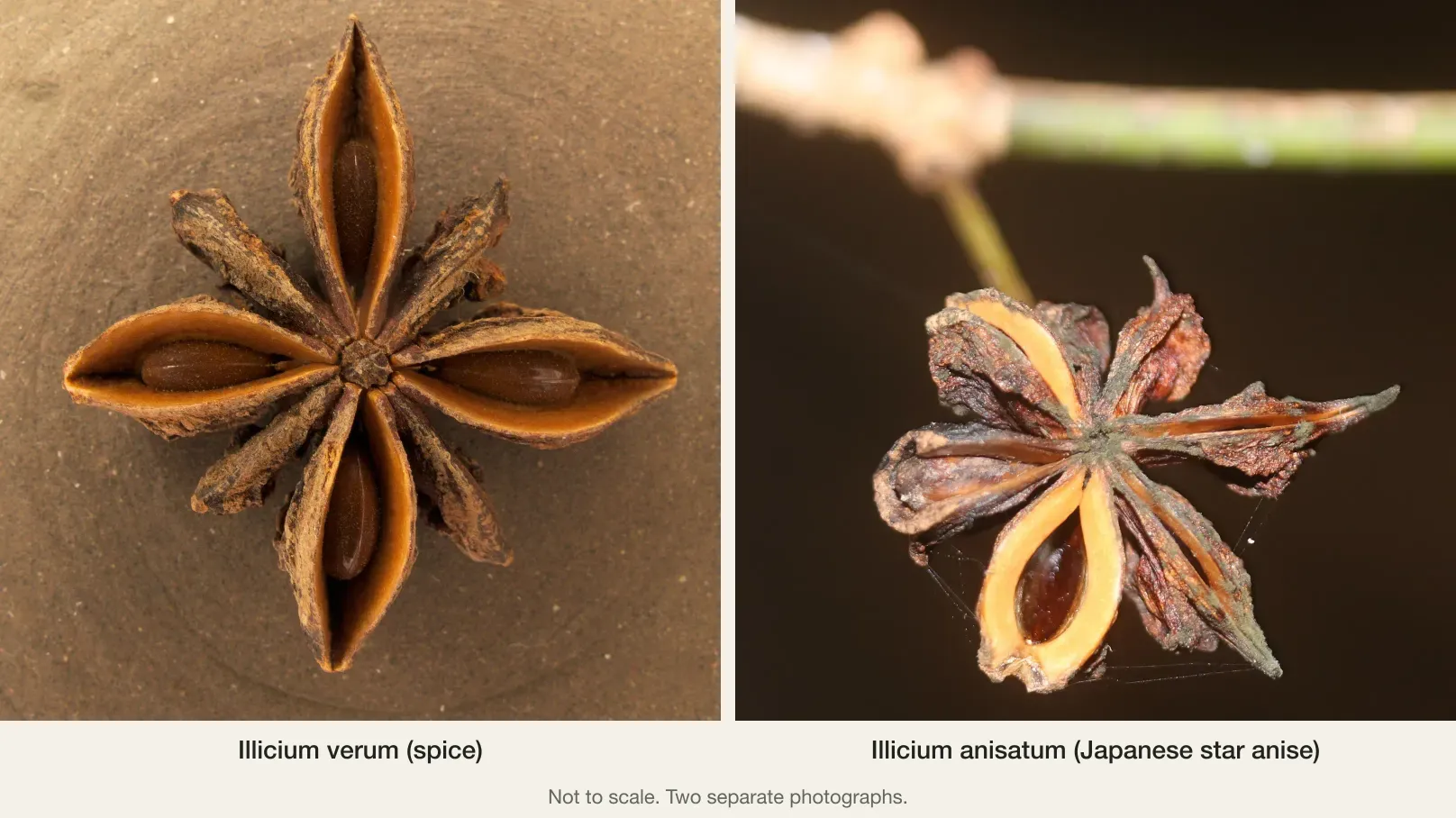

Japanese star anise and the spice are two species of one genus, and US rules treat them differently. The federal list of spices names only Illicium verum, under “Anise, star” and “Star anise”.6 The FDA considers Chinese star anise GRAS “when used as a spice or flavoring”; Japanese star anise is not GRAS.7 And in the FDA’s own words, Japanese star anise “in its dried or processed form cannot be distinguished from Chinese star anise through visual examination.”7
This page explains how the two species differ, why a visual check is not enough, which laboratory methods tell them apart, and what a buyer can ask a supplier. It covers species identification and supply-chain quality only, not health effects.
What is the difference between star anise and Japanese star anise?
Japanese star anise vs Chinese star anise is a question of species, not of grade or quality. The difference between Chinese star anise and Japanese star anise is that they are two plants of the genus Illicium with different native ranges, different chemistry and a different legal status as food. The table at the top of this page sets them side by side with a source on every cell; the note under each trait says how far it helps with a dried fruit.
On paper, the botanical split is clear. I. verum is native to southern China (Fujian, Guangdong, Guangxi and Yunnan) and Vietnam.1 I. anisatum is native to Japan, South Korea and Taiwan,2 and it does not occur naturally in South-East Asia.5 Both are placed today in the Schisandraceae; older references, including PROSEA, give the family as Illiciaceae.1,2,4 In the hand, the fruits are another matter: EFSA, citing the European Pharmacopoeia commentary, says they “resemble each other closely”.15
The decisive difference is chemical. Anisatin is a neurotoxic sesquiterpene lactone,17,12 and it is isolated from I. anisatum.13 I. verum is not anisatin-free: what separates the species is the size of the signal. In direct mass-spectrometry tests on the fruit, the anisatin signal from Japanese star anise was about 250 times higher than from Chinese star anise in one study,11 and typically more than 1,000 times higher in another.12
Japanese star anise is also not the only look-alike. The official food-control laboratory of Geneva measured high anisatin levels in Illicium lanceolatum and I. majus as well as in I. anisatum.14
Why you can’t reliably tell them apart by eye
Botanical descriptions do list differences between the fruits. Each one is a tendency, though, and none of them survives drying, breaking and grinding well enough to settle a question about a lot.
Fruit shape and the tip of each follicle
A star anise fruit is a star of usually eight boat-shaped follicles, sometimes five to thirteen, each 1–2 cm long, rough, rigid and reddish-brown, with one seed.4 Vietnam’s national standard describes the same fruit as usually eight boat-shaped follicles 12–15 mm long.8 A 1918 US reference describes each follicle as having “an acute summit” that tapers “to a nearly straight beak”.9
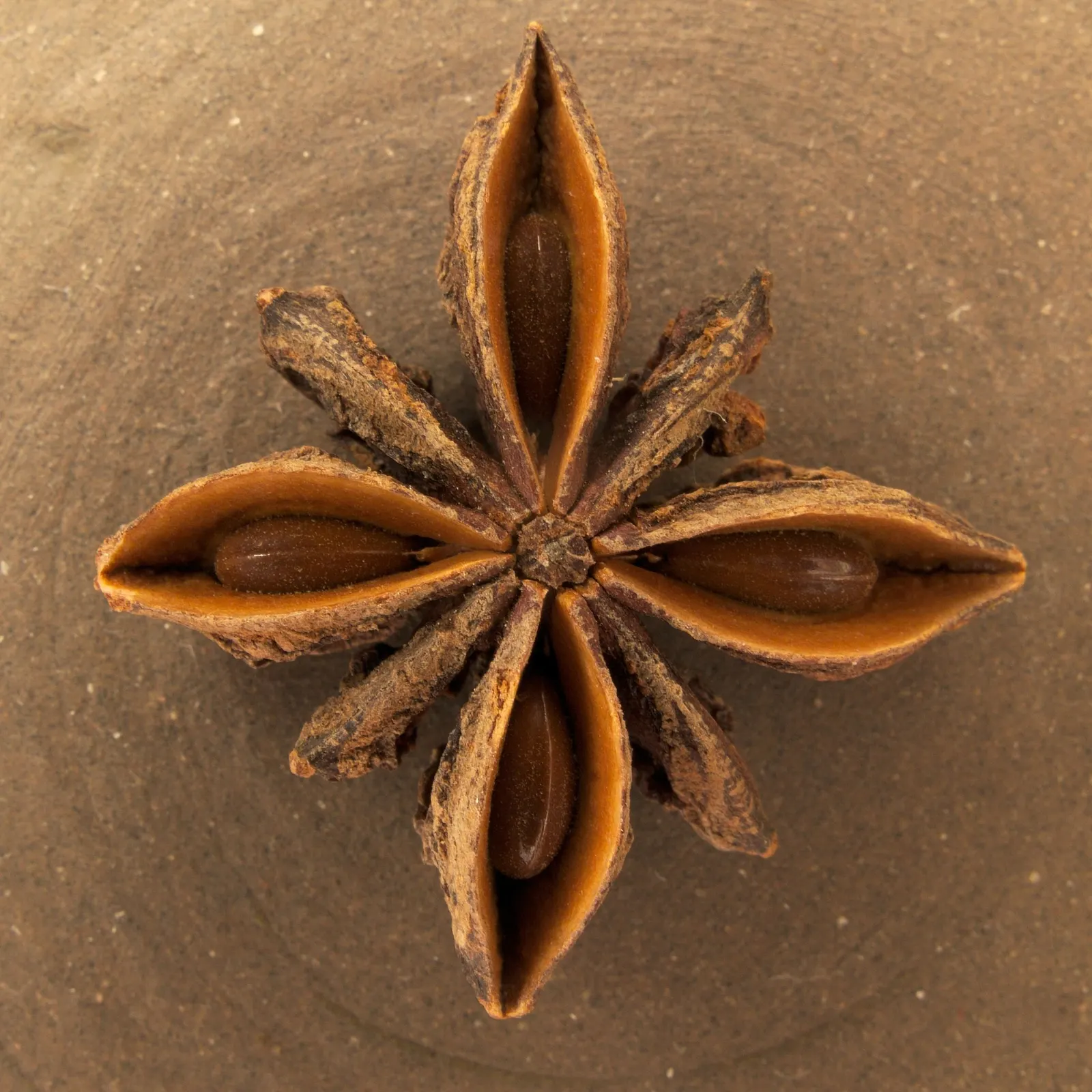
PROSEA describes the fruit of I. anisatum as 2.5–3 cm across with seven or eight follicles, smaller than that of I. verum, and often not a regular star because some carpels abort; its follicles “are not swollen in the middle and are more pointed at the apex”.5 The same account then adds a caution: “Botanical drawings do not corroborate the morphological differences in the fruits.”5
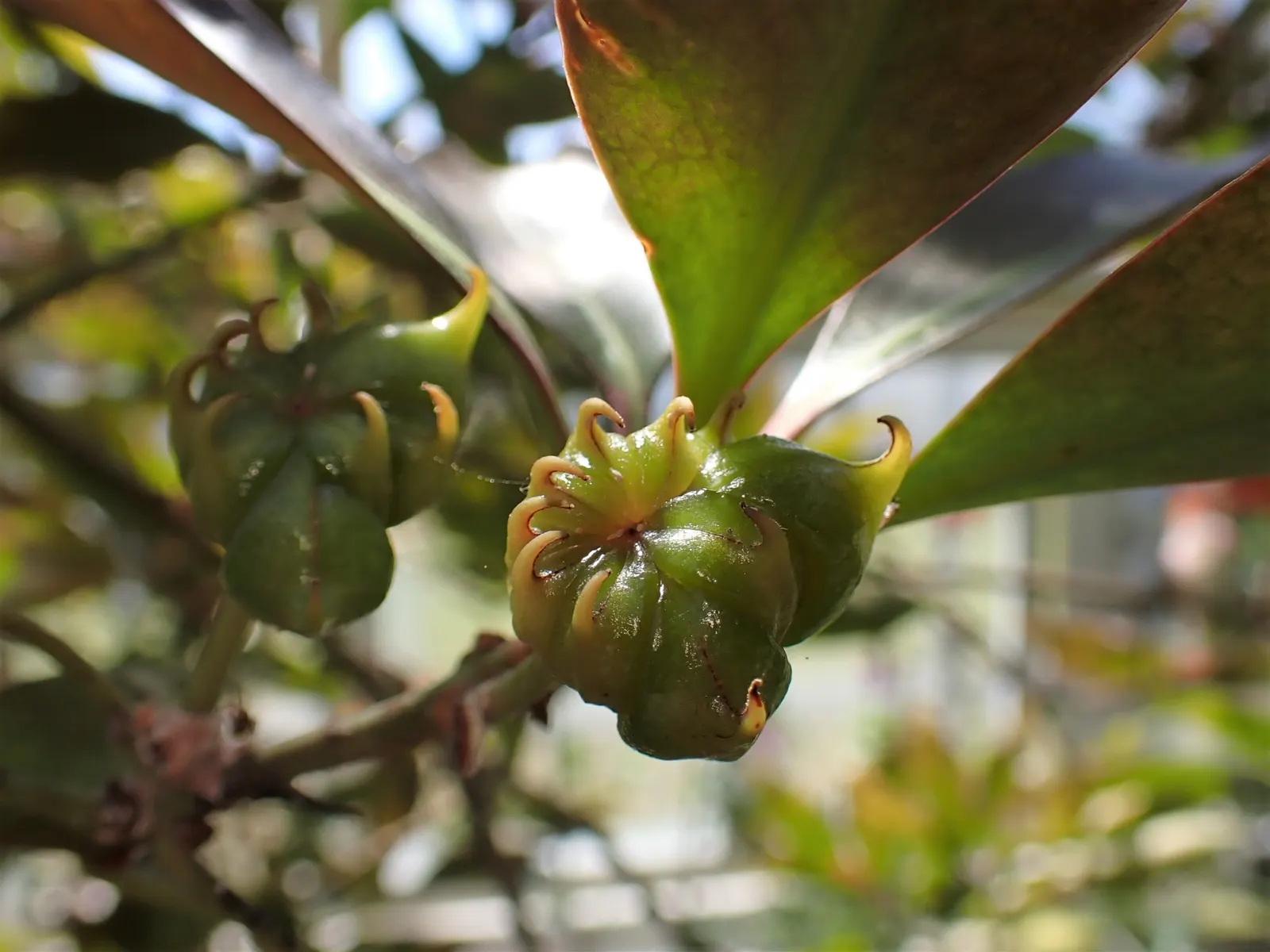

The hooked tips in that photograph belong to green, unripe fruit on a botanic-garden plant. A mature fruit, split open on the branch, is closer to what a buyer handles, though it is still not a dried trade sample:
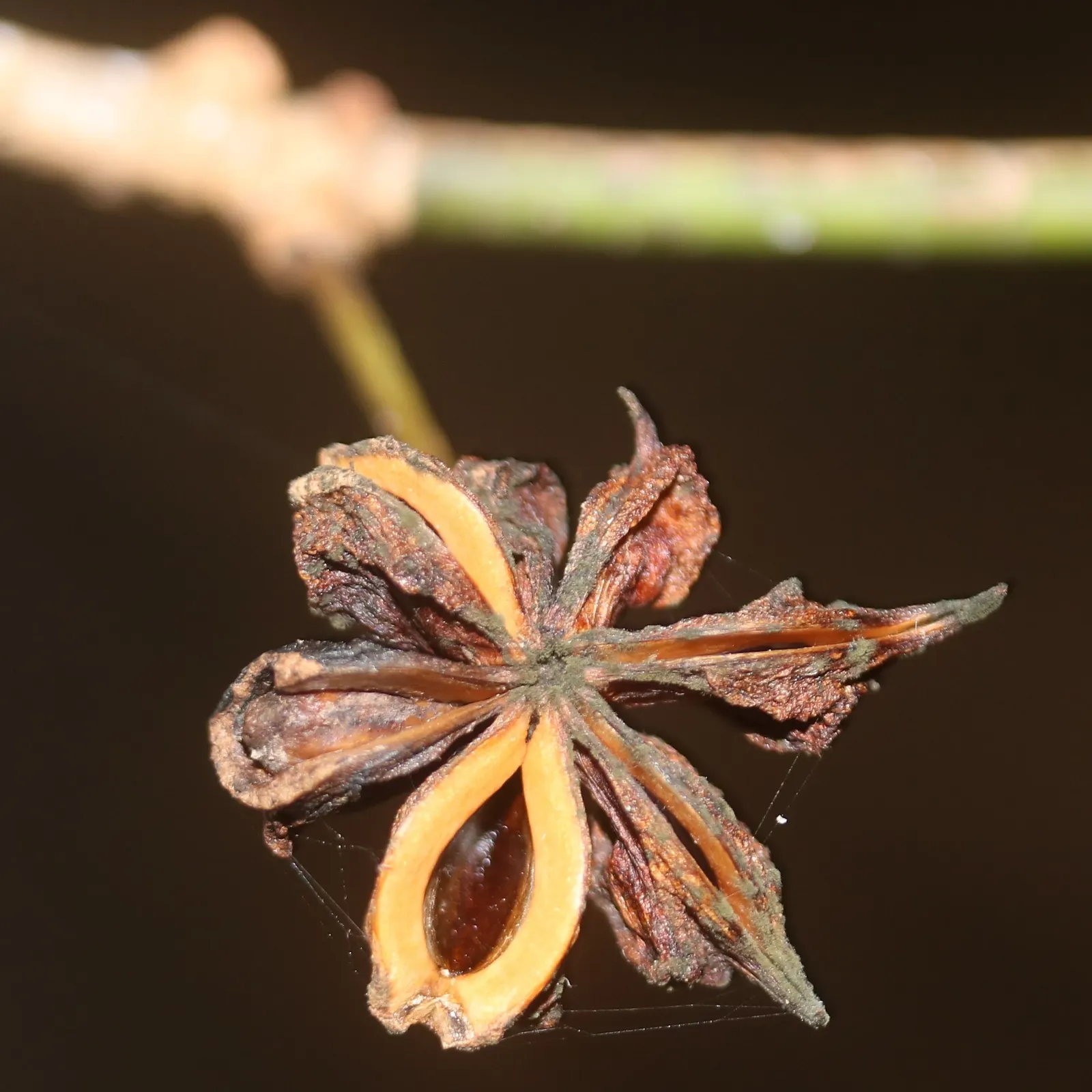
.jpg)
Smell
PROSEA records the odour of I. anisatum as “balsamic and not anise-like”,5 against the characteristic anise-like odour of star anise oil.4
A study at the Royal Botanic Gardens, Kew, measured the chemistry behind that difference. In the volatiles released from the pericarps of eight Illicium species, (E)-anethole made up 57.6–77.1% in I. verum and 16.0% or less in every other species. I. anisatum alone contained asaricin, methoxyeugenol and two other eugenol derivatives.10
Those are instrument readings, not impressions. A smell can raise a doubt about a lot, but it is not an identification method, and nothing on this page suggests tasting a sample.
Broken, ground and tea-cut material
The FDA’s statement covers fruit in “dried or processed form”.7 Once the star breaks, the shape clues break with it. A study from Wageningen describes herbal teas containing “star anise fragments too small to be visually recognised”,12 and a US method was developed specifically to detect I. anisatum in “the powdered mixture of I. verum”.18
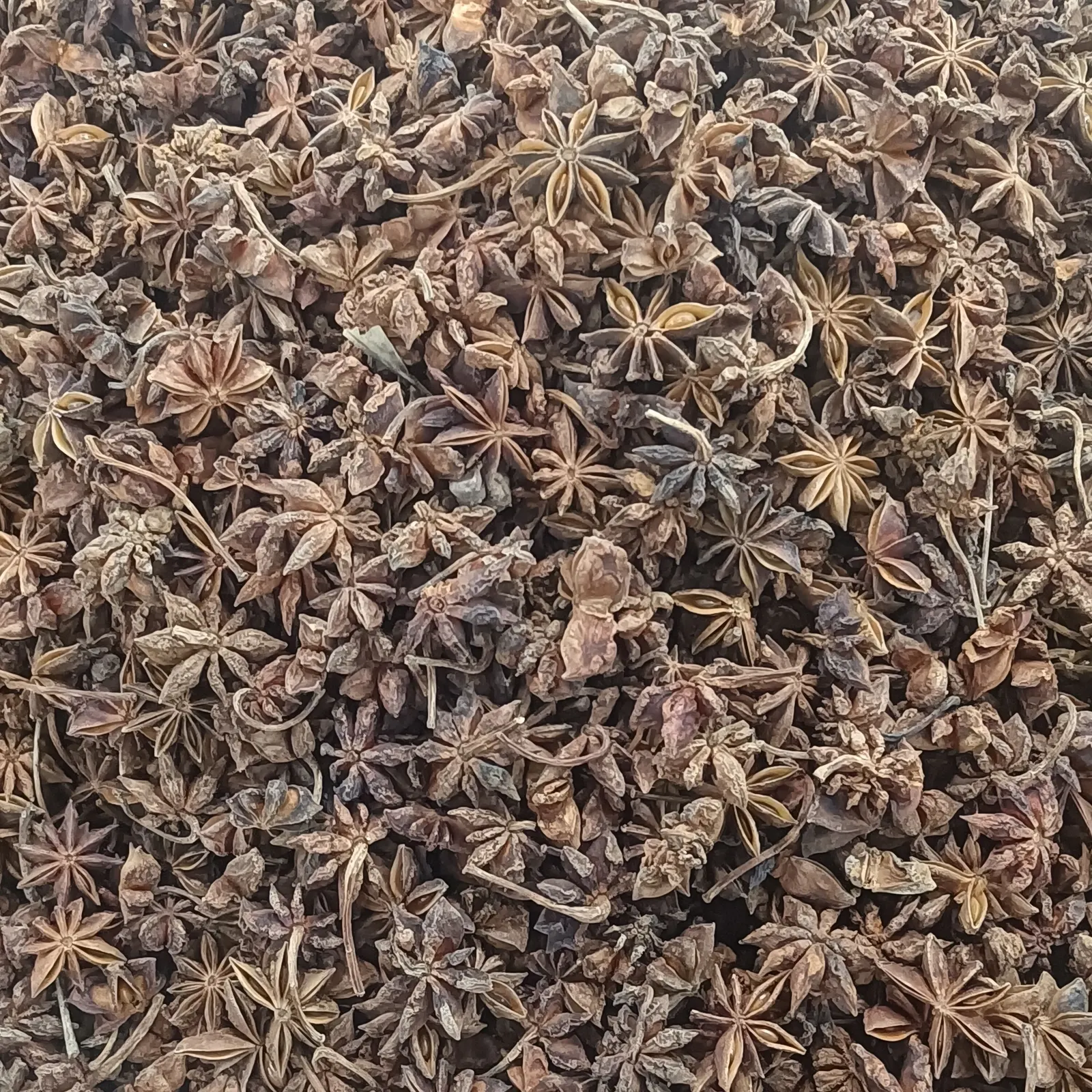

Shape and smell can raise a doubt, but they cannot settle it. Fruits vary in size and in the number of follicles, broken pieces lose the star shape, and ground or tea-cut material has no shape at all. That is why the FDA said in 2003 that it was “evaluating chemical analytical methods that will differentiate between the two species of star anise”.7
How laboratories tell them apart
Since 2005, research groups have published at least eight ways to separate the species. Some read a profile of the whole fruit (cells, DNA, volatiles, an infrared spectrum); others measure anisatin itself.
| Method | What it looks at | Works on | Reported performance |
|---|---|---|---|
| Fluorescence microscopy + gas chromatography (GC) | Differences in the epicarp cells; a GC profile | Powdered mixtures | Described by its authors as “short and rapid” (Joshi et al. 2005)18 |
| Thin-layer chromatography (TLC) + HPLC-MS/MS | TLC flavonoid pattern separates the species; HPLC-MS/MS quantifies anisatin | Star anise samples, including low admixtures of I. anisatum | Anisatin limit of detection 1.2 µg/kg, limit of quantification 3.9 µg/kg (Lederer et al. 2006)17 |
| DNA: PCR-RFLP of the ITS region | Species-specific fragment pattern after cutting with the enzymes PstI and BfmI | Powdered samples | Distinguished I. anisatum from other Illicium species (Techen et al. 2009)19 |
| Thermal desorption GC-MS (TD-GC-MS) | Pericarp volatiles: the (E)-anethole share; asaricin and methoxyeugenol | Pericarp | 8 Illicium species compared at Kew (Howes et al. 2009)10 |
| DART high-resolution mass spectrometry | Anisatin directly, with no sample pretreatment | Whole fruit; brewed tea | Adulteration down to 1% (w/w) still measurable; none of 8 retail teas contained significant anisatin (Shen et al. 2012)12 |
| LC-MS/MS (official control laboratory, Geneva) | Anisatin | Star anise and other Illicium samples | Validated; quantification range 0.2–8 mg/kg; high anisatin also in I. lanceolatum and I. majus (Mathon et al. 2013)14 |
| Direct plant-spray mass spectrometry | Anisatin, sprayed straight from the fruit | A single carpel | A yes/no answer in seconds, without sample preparation (Schrage et al. 2013)11 |
| Short-wave infrared (SWIR) hyperspectral imaging | The infrared spectrum of each fruit | Whole dried fruit; potentially sorting large batches on a conveyor belt | Identity predicted correctly for 98.42% (I. anisatum) and 97.85% (I. verum) in an external data set (Vermaak et al. 2013)20 |
The profile methods answer “which species is this?”. The anisatin methods answer the question regulators ask, and they work on material that has no shape left: the DART study measured brewed tea, and its authors note that their method “measures the actual biotoxin”.12 Because I. verum gives a small anisatin signal of its own, these methods separate the species by the size of the signal, not by its mere presence.11,12
These are published research methods. Ask your laboratory which one it uses and whether it is validated for star anise.
Why regulators care: anisatin and the 2001–2003 alerts
The species question reached regulators in Europe in 2001–2002 and in the United States in 2003. Every measure below is in the past tense: the EU conditions no longer apply.
| Date | Event |
|---|---|
| 1996 | A paper in Economic Botany is titled “Confusion of common names for toxic and edible ‘star anise’ (Illicium) species”.21 |
| September 2001 | Dutch authorities are told of illness after people drank one herbal tea. Inspection suggests it possibly contained Japanese star anise; NMR analysis confirms anisatin in the tea; the supplier is urgently advised to withdraw it from the market.22 |
| 1 February 2002 | Commission Decision 2002/75/EC (OJ L 33, 2.2.2002, p. 31) sets special conditions for star anise from non-EU countries: a health certificate, a report of official sampling and analysis, entry only through designated points, and a code linking each consignment to its papers. Japanese star anise may not be imported for human consumption unless labelled as unfit for it.23,3 |
| 16 February 2002 | England’s Emergency Control Order (SI 2002/334) comes into force, implementing the Decision. It defines Japanese star anise as Illicium anisatum, “also known as Illicium religiosum, Illicium japonicum, shikimmi and skimmi”.3 |
| August 2003 | Commission Decision 2003/602/EC (OJ L 204, 13.8.2003, p. 60) repeals 2002/75/EC: its conditions are “no longer justified”. Scotland’s matching order is revoked from 9 October 2003.24 |
| 10 September 2003 | FDA press release P03-67, an advisory on “teas” brewed from star anise. The FDA states that Chinese star anise is GRAS and Japanese star anise is not; that the two cannot be told apart visually once dried or processed; that it is evaluating chemical methods; and that it will monitor star anise imports so that Japanese star anise is not labelled for food use. It also states that it “has not yet identified the specific type of star anise associated with the illnesses”.7 |
| 2011–2012 | Trade press reports that the American Herbal Products Association lists Japanese star anise fruit as the known adulterant of star anise fruit (November 2011) and adds identification methods for star anise to its Botanical Authentication Program (January 2012).25,26 |
Anisatin, a neurotoxic sesquiterpene lactone, is the compound behind these measures: it was the substance confirmed in the Dutch tea, and it is the marker that the anisatin methods above measure.22,17,12 Note what the FDA did not say in 2003: it had not established whether the star anise linked to the US reports was Japanese star anise or a mixture.7
We found no later FDA statement replacing the 2003 advisory in a search on 7 October 2026. The original press release is no longer served at its fda.gov address, so it is cited here from the Internet Archive’s copy.
What Japanese star anise is used for
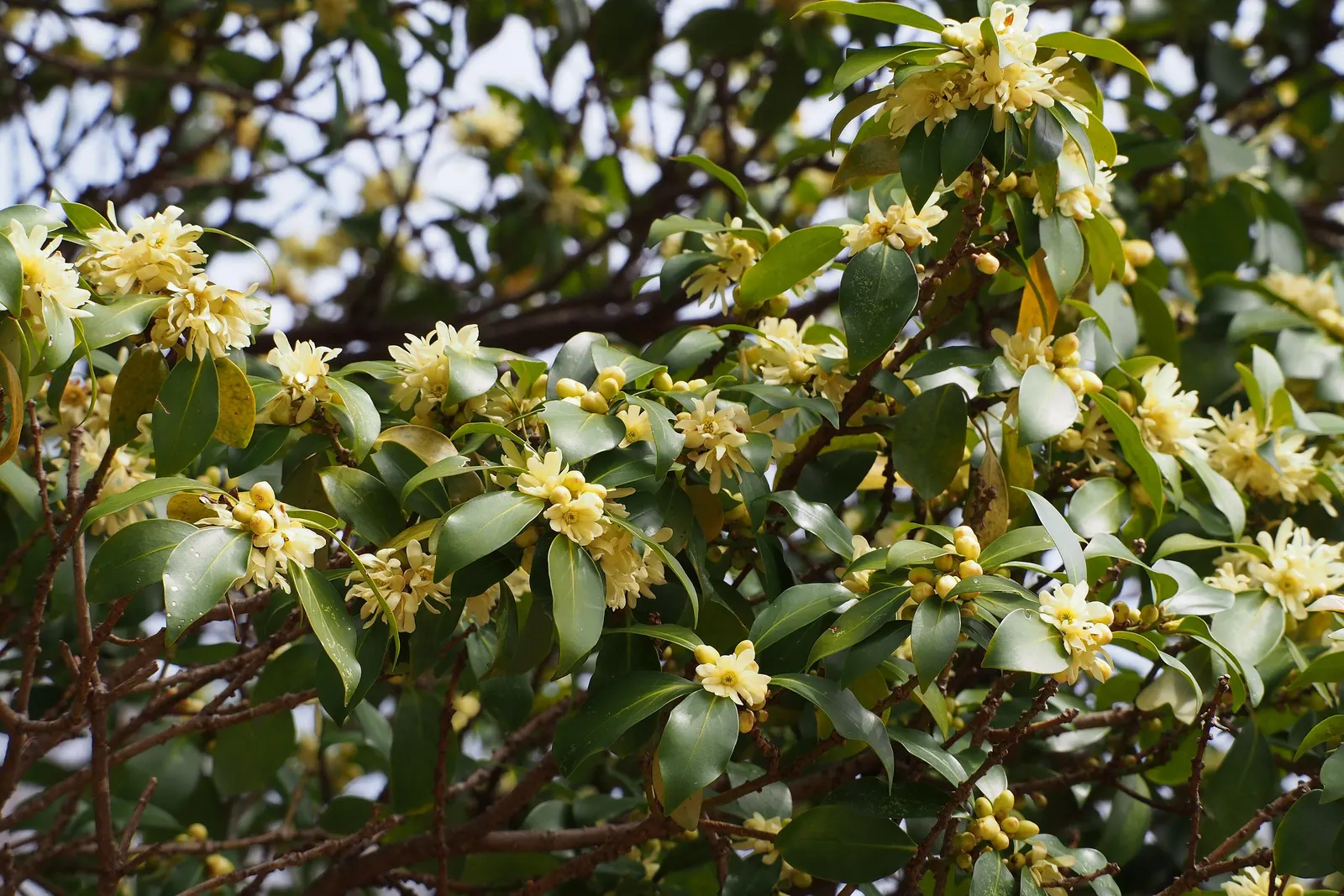
In Japan, the dried and powdered leaves of I. anisatum are burned as incense,16 and flowering twigs are a popular cut flower in cemeteries and Buddhist temples.5 In the temperate zone it is planted widely as an ornamental.5,2
.jpg)
As food, its US status is plain. The FDA wrote in 2003 that Japanese star anise “should be used for decorative purposes only”,7 and the federal list of spices names only Illicium verum.6
This page does not cover growing Illicium anisatum as an ornamental.
Vietnamese star anise is Illicium verum
Star anise grown and traded in Vietnam is Illicium verum, the same species as Chinese star anise; the plant is native to southern China and Vietnam, while Japanese star anise does not occur naturally in South-East Asia.1,5 Read more about where star anise comes from in Vietnam.
Vietnam’s national standard for whole star anise, TCVN 8852:2011, defines the product as the fruit of Illicium verum.8 Origin is not proof of species, so the checks below apply to every lot, whatever its origin.
Buyer checklist: what to ask a star anise supplier
- Name the species on every document. The purchase order, the specification and the certificate of analysis should say Illicium verum Hook. f., the name the US list of spices uses, not just “star anise”.6
- Ask how species identity was tested, lot by lot. Ask for the method by name (TLC, HPLC-MS/MS for anisatin, GC-MS or DNA testing of the ITS region), the laboratory’s name and the test date. The methods are in the table above.
- Ask for anisatin results when you buy for tea, blends or ground product. Broken, ground and tea-cut material cannot be checked by eye.7,12
- Match lot codes. The code on the certificate should match the code on the bags. This is how the EU’s 2002 import rule worked: certificate, analysis report and consignment code had to correspond.23,3
- Prefer whole fruit when you need to inspect on arrival. Whole fruit at least allows a first visual screen for shape and follicle tips.4,5 It is not a substitute for testing.
- Keep a retained sample from each lot, so that a test can be repeated.
- If you buy essential oil, ask whether it was checked for safrole. Safrole is “a typical component of the oil from shikimi fruit”; it was not detected in the star anise oil EFSA assessed in 2023.15
Quality standards such as ISO 11178:1995 and TCVN 8852:2011 set requirements for star anise as a product. We could not confirm from their public text whether they include a species-identity test, so ask for one explicitly.27,8
Not to be confused with anise seed
Star anise is also often confused with anise seed (Pimpinella anisum), an unrelated plant; see star anise vs. anise seed.
What this page does not cover
This page compares two species for identification and supply-chain quality. It gives no health advice: it does not describe what Japanese star anise does to the body, and it does not say who should or should not use star anise. It gives no recipes, no prices and no growing advice. It names no supplier or brand as safe or contaminated, and we have not tested, smelled or sourced any sample ourselves.
Frequently asked questions
What is the difference between star anise and Japanese star anise?
They are different species. Star anise, Illicium verum, is the spice: native to southern China and Vietnam and listed in 21 CFR 182.10. Japanese star anise, Illicium anisatum, is native to Japan, South Korea and Taiwan; the FDA says it is not GRAS, and it gives a far stronger anisatin signal in laboratory tests. Dried, the FDA says the two cannot be told apart by eye. See the comparison above.
Are there two types of star anise?
More than two Illicium species have star-shaped fruit, but only Illicium verum is listed as the spice star anise in US regulations. Japanese star anise (I. anisatum) is the best-known look-alike. A Kew study compared the fruit of eight Illicium species, and a Geneva food-control laboratory measured high anisatin in I. lanceolatum and I. majus as well as I. anisatum. See how laboratories tell them apart.
Image credits
- “Japanese star anise vs Chinese star anise (composite)” by Bff; Alpsdake, via Wikimedia Commons, licensed CC BY-SA 4.0. Combined from “Illicium verum20170511 7549” by Bff and “Illicium anisatum (fruits s10)” by Alpsdake, both CC BY-SA 4.0 on Wikimedia Commons; cropped to square panels and labelled. This combined image is licensed CC BY-SA 4.0.
- “Illicium verum20170511 7549” by Bff, via Wikimedia Commons, licensed CC BY-SA 4.0. Resized; converted to WebP.
- “Illicium anisatum kz01” by Krzysztof Ziarnek, Kenraiz, via Wikimedia Commons, licensed CC BY-SA 4.0. Resized; converted to WebP.
- “Illicium anisatum (fruits s10)” by Alpsdake, via Wikimedia Commons, licensed CC BY-SA 4.0. Resized; converted to WebP.
- “Star anise ~ Illicium verum” by Fumikas Sagisavas, via Wikimedia Commons, licensed CC0. Resized; converted to WebP.
- “Japanese star anise (Illicium anisatum)” by harum.koh, via Wikimedia Commons, licensed CC BY-SA 2.0. Resized; converted to WebP.
Sources
- 1
Family Schisandraceae; native to China (Fujian, Guangdong, Guangxi, Yunnan) and Vietnam; common names; uses.
- 2
Synonym I. religiosum; Japanese name shikimi; native to Japan, South Korea and Taiwan; ornamental use.
- 3
The Food (Star Anise from Third Countries) (Emergency Control) (England) Order 2002 (SI 2002/334)
Made 14 February 2002, in force 16 February 2002. Defines Japanese star anise; sets the import conditions of Decision 2002/75/EC.
- 4
Botany, cultivation, fresh-to-dry ratio, oil composition, China and Vietnam as the main producers. Production figures in this 1999 text are historical and not used as current.
- 5
Fruit and seed description; how the fruit differs from I. verum; “Botanical drawings do not corroborate the morphological differences in the fruits”; does not occur naturally in South-East Asia; ornamental and cut-flower use in Japan.
- 6
§ 182.10 Spices and other natural seasonings and flavorings
Lists “Anise, star” and “Star anise” as Illicium verum Hook. f. No other Illicium species is listed. Read through the eCFR renderer API.
- 7
FDA Issues Advisory on Star Anise “Teas”
Chinese star anise GRAS “when used as a spice or flavoring”, Japanese star anise not GRAS and “should be used for decorative purposes only”; the two cannot be told apart visually once dried or processed; FDA evaluating chemical methods and monitoring imports; FDA “has not yet identified the specific type of star anise associated with the illnesses”. The original fda.gov address no longer serves the page.
- 8
TCVN 8852:2011 Hoa đại hồi (Illicium verum Hook. f.)
Scope and definition read; the table of physico-chemical limits is behind a paywall and not reproduced.
- 9
[Illicium entry, The Dispensatory of the United States of America (1918)]
A historical reference work. Used only for the description of the I. verum follicle tip: “an acute summit” tapering “to a nearly straight beak”.
- 10
Abstract read on PubMed (PMID 19507874). Royal Botanic Gardens, Kew; pericarps of 8 Illicium species.
- 11
Abstract read on PubMed (PMID 23932223).
- 12
Abstract read on PubMed (PMID 22484123).
- 13
Anisatin, a potent GABA antagonist, isolated from Illicium anisatum
Abstract read on PubMed (PMID 6974321). Used only for the fact that anisatin is isolated from I. anisatum.
- 14
Analysis of the neurotoxin anisatin in star anise by LC-MS/MS
Abstract read on PubMed (PMID 23802692). Official Food and Veterinary Control Authority of Geneva.
- 15
Quotes Ph. Eur. 11.0 for star anise fruit (≥ 70 mL/kg oil, ≥ 86.0% trans-anethole); GC–MS analysis of seven recent batches, all originating from China (Table 3), and GC-FID analysis of four batches against the specification (Table 2); “often used as a cheaper substitute for anise fruit”.
- 16
Used only for the incense use in Japan (“the dried and powdered leaves are burned as incense”). Replace with a primary source when one is found.
- 17
Abstract read on PubMed (PMID 16536563): TLC flavonoid pattern; anisatin as marker; LOD 1.2 and LOQ 3.9 µg/kg.
- 18
- 19
Detection of Illicium anisatum as adulterant of Illicium verum
Abstract read on PubMed (PMID 19145553).
- 20
Abstract read on PubMed (PMID 23277152).
- 21
Confusion of common names for toxic and edible “star anise” (Illicium) species
Title and citation read in the reference lists of GRIN-Global and PROSEA. The paper itself was not read.
- 22
An epidemic of epileptic seizures after consumption of herbal tea
Article in Dutch; English title and abstract as given on PubMed. Used only for the regulatory sequence of September 2001 (withdrawal of the tea, anisatin confirmed by NMR).
- 23
EUR-Lex did not return the text to automated access. Title, date and OJ reference read on EFTA’s EEA-Lex record (“no longer in force”); the import conditions read in the UK orders that implemented it (SI 2002/334 and the explanatory note of SSI 2002/64).
- 24
Cites Commission Decision 2003/602/EC (OJ L 204, 13.8.2003, p. 60), which repealed 2002/75/EC because its conditions were “no longer justified”. In force 9 October 2003. Decision 2003/602/EC itself was not read.
- 25
AHPA updates adulterants guide for star anise
Trade-press report; the AHPA guidance itself was not read.
- 26
AHPA helps trade differentiate ‘true’ star anise from toxic Japanese variety
Trade-press report of AHPA adding identification methods for star anise to its Botanical Authentication Program. The AHPA documents were not read.
- 27
ISO 11178:1995 Star anise (Illicium verum Hook. f.) — Specification
Reviewed and confirmed in 2024. Numeric limits not read (paid text).